Concrete Waste Processing Equipment and Flowchart Design
Successful concrete waste processing is determined by the mechanical efficiency of rebar liberation and precise particle shaping. By integrating NK1213C primary impact energy with VSI6X closed-circuit flowchart design, operators can achieve a 98.6% steel recovery rate and meet strict G5 road base standards. This engineering approach optimizes TCO by reducing energy consumption to 1.15 kWh/t while ensuring zero-tolerance compliance for PM10 dust and urban noise levels in sensitive demolition zones.
Navigating Regulatory and Technical Hurdles in Urban Recycling
Operational viability in urban concrete recycling is predicated on the machine-material interaction between high-tensile reinforcement steel and the primary impact rotor. In regulated environments such as Liberia, achieving G5 road base certification requires a flowchart that transitions seamlessly from heavy demolition debris to high-density, shaped aggregate. The deployment of integrated mobile systems ensures that project ROI is maximized through reduced transport overheads and immediate on-site material reuse, all while adhering to stringent environmental impact mandates.
Integrated Circuitry for Reinforced Demolition Waste
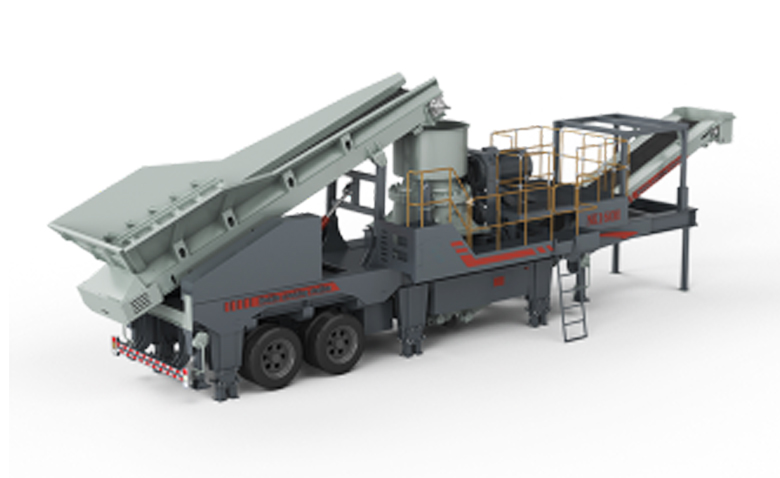
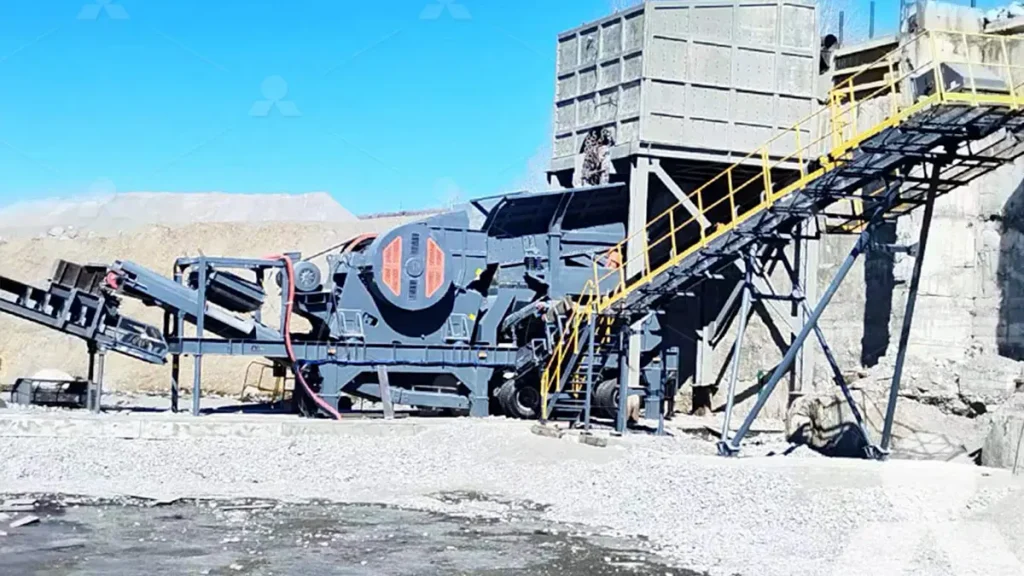
A high-performance flowchart must prioritize the sequential liberation of impurities and the precision grading of concrete fractions. The process begins with the NK1213C mobile plant, where reinforced slabs are subjected to primary impact forces. An integrated overhead magnetic separator identifies and extracts ferrous contaminants before they reach the secondary stage. This automated separation is critical for preventing downstream equipment damage and ensuring aggregate purity.
Secondary processing involves the VSI6X1263 sand maker, which utilizes rock-on-rock crushing to correct the particle geometry of recycled stone. By maintaining a closed-circuit loop, oversized material is continuously returned for further reduction until the desired P80 calibration is achieved, typically targeting a 19.5mm threshold for high-grade sub-base applications.

Performance Benchmarks for Recycling Hardware
Compliance and profitability depend on matching equipment throughput with site-specific volume requirements. The following technical specifications represent the core parameters for the integrated recycling circuit.
| Component Model | Max Feed Size | Capacity (t/h) | Energy Profile |
|---|---|---|---|
| NK1213C Mobile Plant | 550 mm | 150 - 300 t/h | Optimized Fuel/Elec Hybrid |
| VSI6X1263 Sand Maker | 50 mm | Up to 580 t/h | 1.15 kWh/t Consumption |
Site Diagnostics: Resilience and Environmental Impact
Global field audits validate the resilience of these systems under extreme conditions. At a demolition site in Dubai, the NK1213C successfully processed reinforced concrete slabs at a consistent 285.5 TPH despite ambient temperatures reaching 44.5°C. The dust-suppression spray system consumed a precise 15.4L/h to maintain visibility and comply with local PM10 air quality standards. Similarly, in the Battersea redevelopment zone of London, the VSI6X1263 operated under a strict 75dB noise limit, producing recycled sand with a fineness modulus of 2.65 and a needle-like particle content of only 6.4%.
Operational integrity in Mumbai demonstrated that the integrated magnetic separator on the NK series retrieved 98.6% of 25mm high-tensile steel before reaching the secondary stage, eliminating the downtime typically caused by metal jams in non-integrated configurations. This reduction in "metal-jam" stoppages increased overall production efficiency by 18.3% compared to traditional manual sorting methods.
Reinforced Concrete + NK1213C + G5 Compliance Calibration
- Stabilized Throughput: 285.5 t/h
- System P80 Calibration: 19.5 mm
- Steel Retrieval Rate: 98.6% Retrieval
- Acoustic Output (Site Boundary): 75 dB
- Particulate Suppression: 15.4 L/h Water Flow
Technical Index: LH-CONCRETE WASTE PROCESSING EQUIPMENT AND FLOWCHART DESIGN-APRIL/2026-Ref-#49201
Technical Compliance FAQ
- How does integrated separation affect the TCO of the recycling line?
- Integrated magnetic separation reduces Total Cost of Ownership by eliminating the need for secondary sorting labor and preventing catastrophic damage to conveyor belts and VSI rotors, effectively increasing uptime by over 18%.
- Can recycled concrete sand replace natural river sand in C40 mixes?
- Yes. By utilizing the VSI6X1263's rock-on-rock shaping technology, the particle geometry and fineness modulus are optimized (e.g., 2.65 FM), allowing recycled sand to meet the strength requirements for C40 and high-performance concrete applications.
Stop Guessing on Rotor Wear Cycles and Environmental ROI
"Unlock the full fiscal potential of your demolition waste with a calibrated flowchart audit." — From the Desk of your Compliance Officer
Analyze NK1213C Fiscal Efficiency
Chief Technical Consultant
15+ Years in Mineral Processing & Mining Machinery
Senior mechanical specialist at Liming Heavy Industry. Leading expert in large-scale crushing circuits and global quarry optimization. His technical insights have helped over 500+ global projects achieve higher efficiency.