Complete Tantalum-Niobium Ore Beneficiation Process Solution
Tantalum and Niobium are critical strategic metals with complex ore properties. This article details a comprehensive, highly efficient beneficiation process developed by Liming Heavy Industry. Centered on gravity separation, the four-stage solution—encompassing crushing and washing, grinding and desliming, gravity separation, and middlings treatment—maximizes recovery rates while minimizing environmental impact and energy consumption.
The Strategic Importance of Tantalum and Niobium
Tantalum (Ta) and Niobium (Nb) are indispensable strategic metals in today's high-tech industries, widely recognized as the "cornerstones of the electronic age." They are extensively utilized in high-end capacitors, aerospace materials, superhard alloys, and advanced medical equipment. However, processing these ores presents significant metallurgical challenges. Tantalum-Niobium ores typically feature low grades, fine dissemination sizes, and high brittleness (making them prone to over-grinding), and they are frequently associated with a complex array of symbiotic minerals.
Backed by over three decades of technological accumulation, Liming Heavy Industry provides global clients with stable, highly efficient, and eco-friendly Tantalum-Niobium ore beneficiation plant solutions.
Core Processing Philosophy
Liming Heavy Industry's beneficiation solutions are engineered around a core philosophy: "More crushing and less grinding, early recovery, classified separation, and green circulation." This approach maximizes mineral recovery rates and economic profitability while drastically reducing energy consumption and environmental impact.
Four Core Stages of the Gravity Separation Process
Our complete Tantalum-Niobium ore processing flowsheet relies primarily on gravity separation and is divided into four pivotal stages:
1. Crushing, Screening & Washing Pre-treatment
Objective: To reduce the run-of-mine (ROM) ore to a suitable size for separation while eliminating the interference of primary slimes.
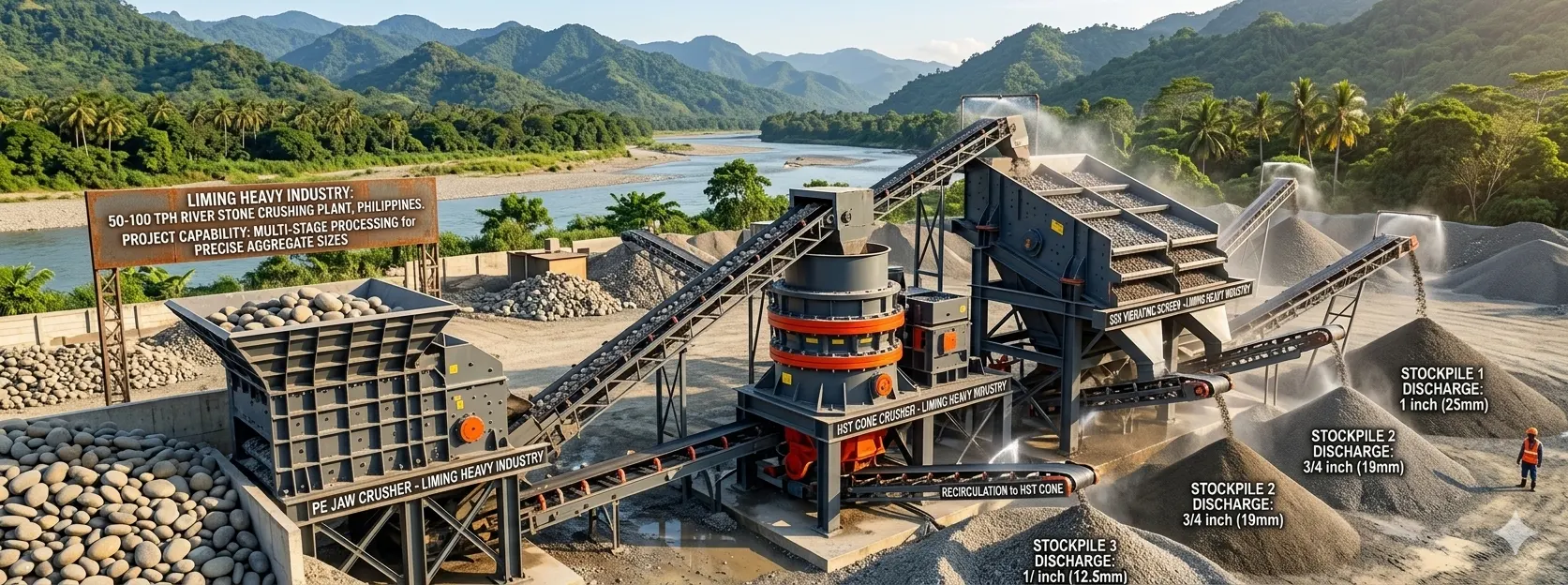
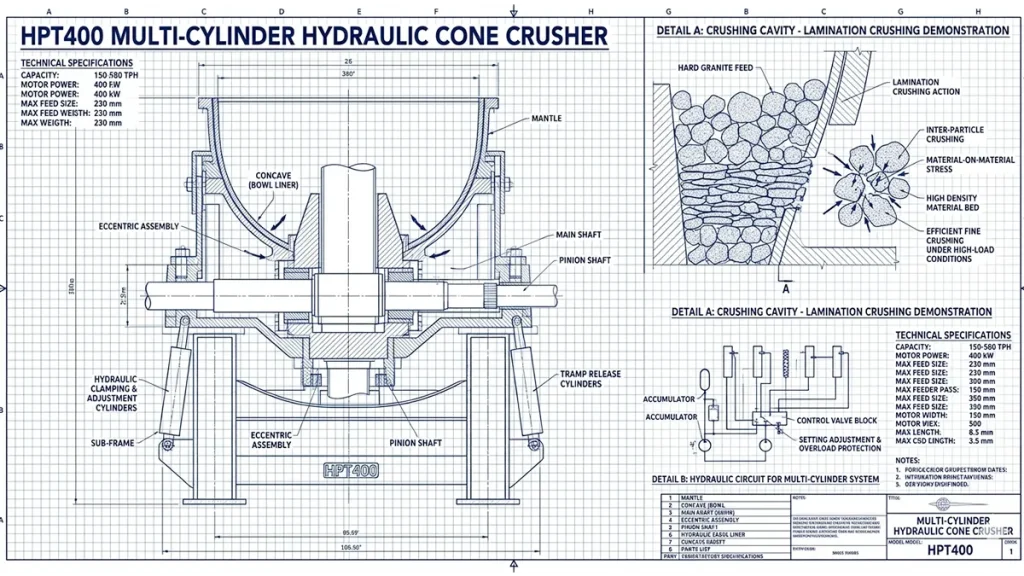
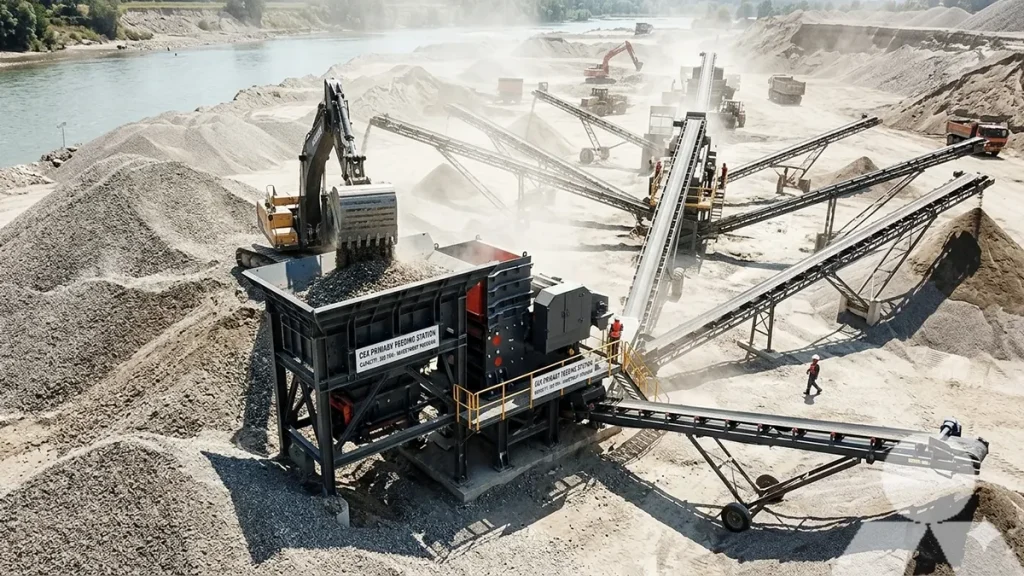
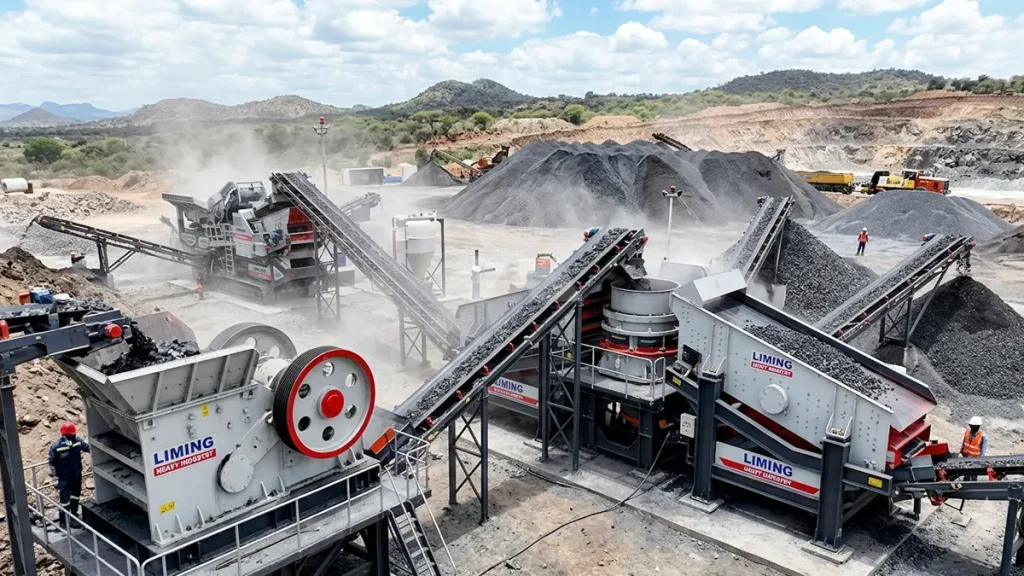
- Crushing: Utilizes a three-stage, one-closed-circuit flowsheet (Jaw Crusher + Secondary Cone Crusher + Vibrating Screen + Fine Cone Crusher + Check Screening).
- Screening: Circular vibrating screens are deployed to strictly control the product size from the crushing circuit.
- Washing: Rotary trommel scrubbers and dewatering screens are used to effectively break up agglomerates and separate large particles from sticky clays.
- Fine Sand Recovery: For fine sands rich in valuable minerals, a sand washing and recovery integrated machine is applied to prevent any resource waste.
2. Grinding, Classification & Desliming
Objective: To achieve optimal mineral liberation while preparing a properly sized pulp for gravity concentration.
- Grinding: Rod mills are employed to gently grind coarse particles (>0.4mm), minimizing over-grinding and the production of excessive fines.
- Classification: Linear vibrating screens are used for check classification, strictly separating the product at the 0.4mm threshold.
- Desliming: For fine particles (<0.4mm), a two-stage hydrocyclone cluster is utilized to remove deleterious micro-fine slimes. The cyclone overflow (fine slime) is routed to the tailings management system, while the underflow enters the core separation circuit.
3. Gravity Separation Concentration (The Core Circuit)
Objective: To leverage the high specific gravity of Tantalum and Niobium minerals to progressively concentrate and separate the valuable metals.
- Roughing & Scavenging: High-capacity spiral chutes are deployed to rapidly process large volumes of pulp, rejecting coarse tailings and yielding rough concentrates and middlings.
- Cleaning: Shaking tables are utilized for multi-stage cleaning operations (roughing, scavenging, cleaning, and scavenger-cleaning) to progressively upgrade the concentrate grade.
- Final Products: This circuit ultimately produces high-grade concentrate (routed to the concentrate pool), sub-concentrate, and tailings.
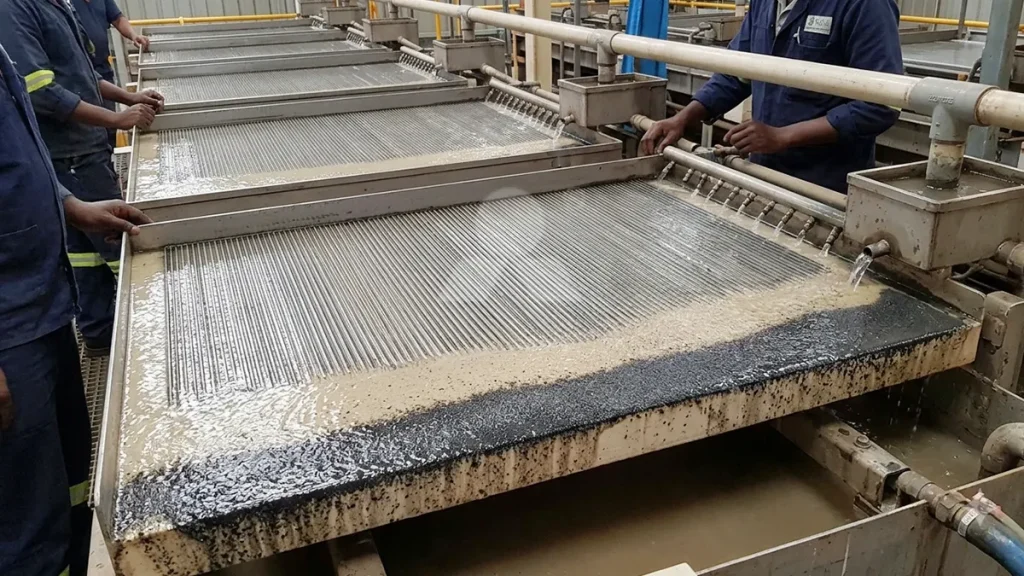
4. Middlings Treatment & Circulation
Objective: To process difficult-to-separate intermediate products, thereby boosting the total overall recovery rate.
- Regrinding and Recirculation: Tailings generated from the cleaning shaking tables (which are rich in intergrown particles/middlings) are directed to a ball mill for regrinding. The reground product is then returned to the gravity separation circuit (spiral chutes) for secondary processing, adhering to the principle of "recover as early as possible, discard as early as possible."
Global Expertise in Mineral Processing
Liming Heavy Industry is a leading specialized enterprise providing integrated system solutions and services for the global aggregate, mineral processing, and mining supply chains. With deep-rooted expertise in aggregates, the group also boasts mature system integration capabilities and rich global execution experience in the beneficiation of various metallic ores, including Tantalum-Niobium, Gold, Iron, and Copper.
Driven by the success of numerous benchmark projects worldwide, Liming Heavy Industry continues to deliver one-stop mining solutions covering crushing, grinding, beneficiation, and comprehensive resource utilization.
Featured Global Benchmark Projects by Liming Heavy Industry:
- Inner Mongolia, China: 3.5 Million TPY Magnetite Ore Beneficiation Project in Bayannur
- Inner Mongolia, China: 6 Million TPY Magnetite Ore Beneficiation Project in Baotou
- Inner Mongolia, China: 2.5 Million TPY Magnetite Ore Beneficiation Project in Baotou
- Tanzania: 1,500 TPD Gold Ore Beneficiation Plant
- DR Congo: 2,000 TPD Copper Ore Beneficiation Plant
- Brazil: Lead-Zinc Ore Beneficiation Project
- Sudan: 2,000 TPD Gold Ore Beneficiation Plant
- Laos: 350 TPH Iron Ore Beneficiation Plant

Chief Technical Consultant
15+ Years in Mineral Processing & Mining Machinery
Senior mechanical specialist at Liming Heavy Industry. Leading expert in large-scale crushing circuits and global quarry optimization. His technical insights have helped over 500+ global projects achieve higher efficiency.