River Gravel Sand Production Line Used Crushing Equipment Investment Program
High-silica river gravel immediately initiates abrasive friction that destroys standard impactor blow bars, bleeding your operational capital. Proper fiscal safeguarding demands non-welded frames and autogenous rock-on-rock crushing mechanics. Deploying this exact configuration minimizes wear-part overhead per shift. Consequently, operators can accelerate their capital payback velocity while maintaining a continuous, high-grade sand yield.
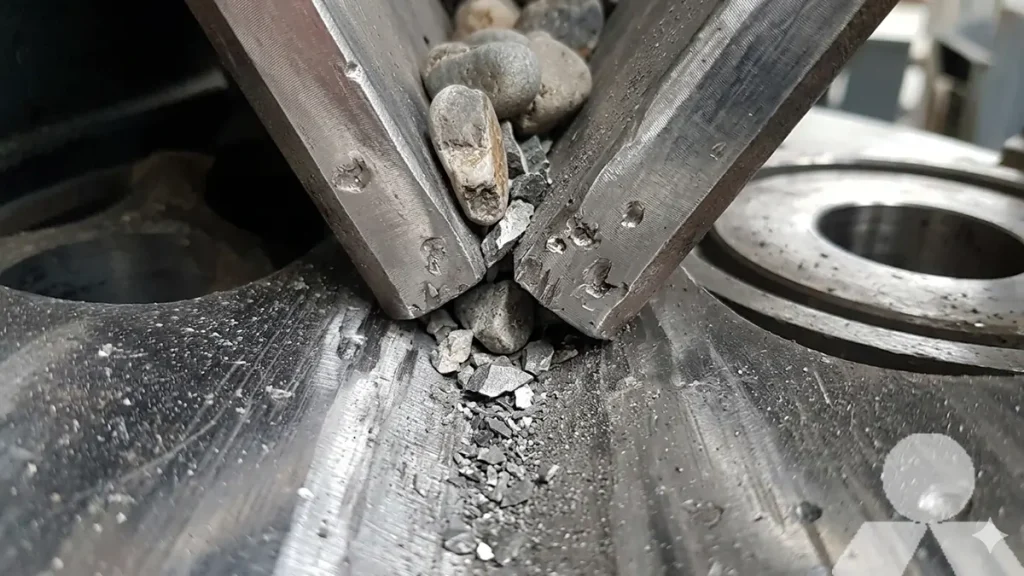
River gravel is not just another aggregate; it is an abrasive financial hazard that will rapidly dismantle poorly configured machinery. The high-frequency metallic 'ping' of this high-silica material against a standard manganese liner indicates immediate kinetic stress and impending component failure. Relying on standard crushers for hard river pebbles results in the invisible leak of secondary maintenance overhead, permanently crippling your capital payback velocity. You must evaluate this material through the lens of structural integrity and asset preservation.
The Fiscal Reality of High-Silica Processing Sites
Silica content exceeding 70% in river gravel obliterates standard wear parts within 48 hours, demanding heavy-duty cast steel frames and precise compression crushing mechanics to stabilize expenditure per shift.
Operators frequently miscalculate the sheer abrasiveness of water-tumbled pebbles. Standard equipment suffers catastrophic fatigue at the eccentric shafts and toggle plates when subjected to constant 150 MPa resistance. Hard rock circuits require specialized metallurgical defenses to prevent extreme volatility patterns in regional electricity costs and maintenance labor. By implementing non-welded, bolted frame architectures, site managers physically isolate vibrational stress from the main structural housing. This foundational stability ensures the asset amortization cycle remains predictable, even under continuous 300 tph loads.
Synchronized Asset Allocation Matrix
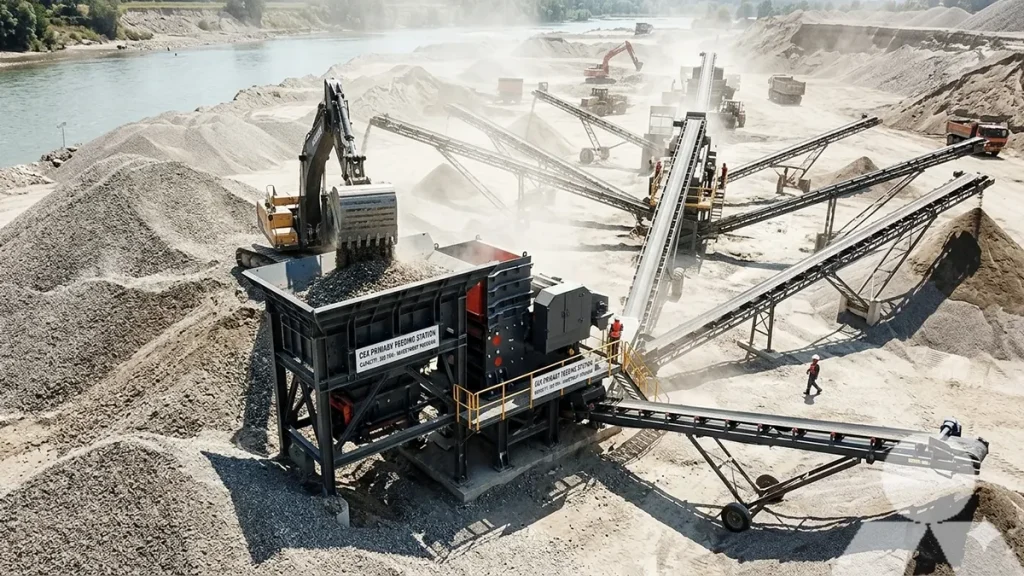
To handle unpredictable 800 tph silica-rich input without jeopardizing fiscal efficiency, we have synchronized the following equipment matrix to enforce strict stage-by-stage material degradation.
To secure your operational viability, random machine selection is unacceptable. The physics of hard rock reduction dictate a primary-secondary-tertiary workflow where every kilowatt of power translates directly into fractured rock, not wasted heat or friction.
| Process Stage | Recommended Model | Engineered Advantage | Power Capacity (kW) |
|---|---|---|---|
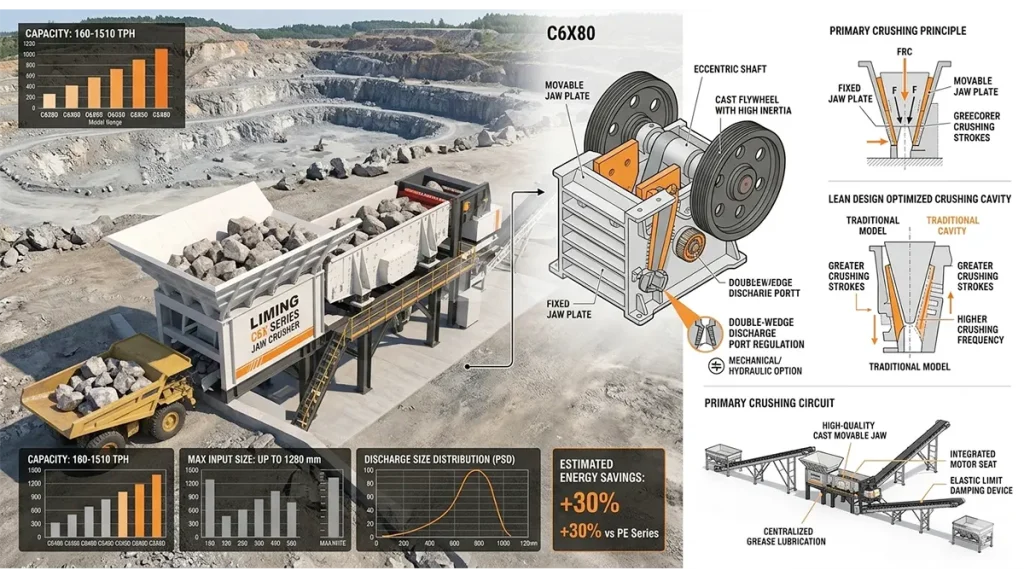
| Primary Crushing | C6X Series Jaw Crusher | Non-welded frame durability | 110 - 400 kilowatts |
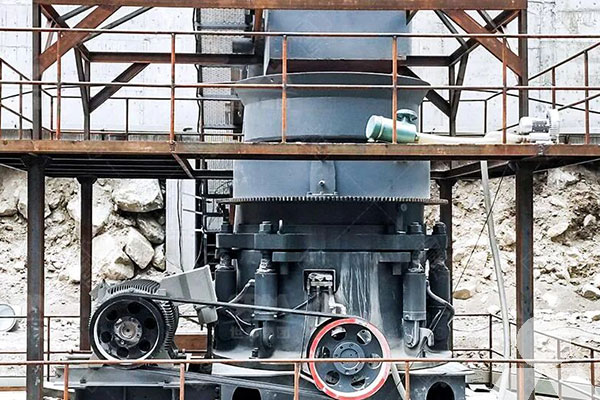
| Secondary Crushing | HPT Hydraulic Cone Crusher | Lamination crushing mechanics | 160 - 750 kilowatts |
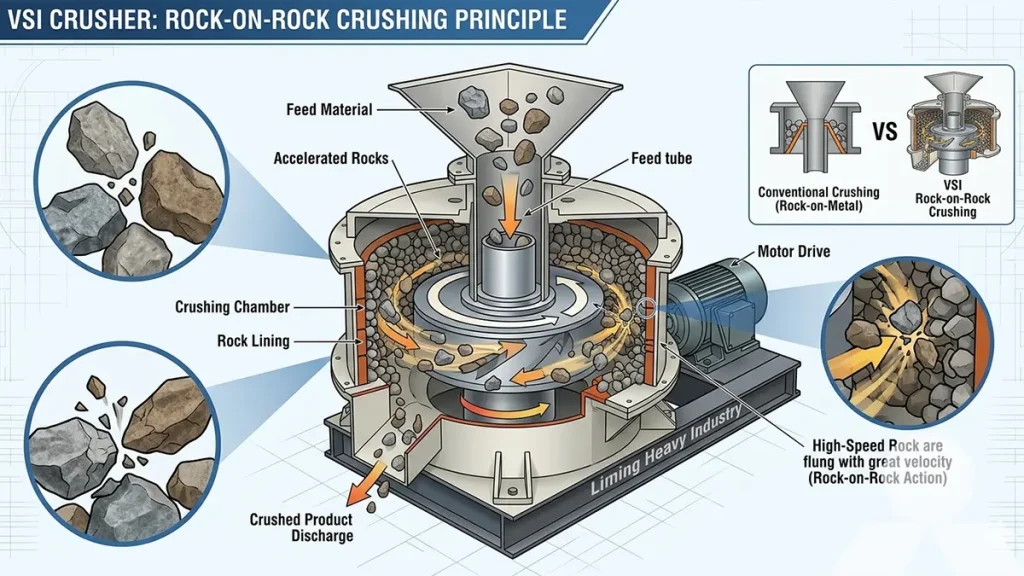
| Tertiary Sand Making | VSI6X Series Vertical Shaft Impactor | Autogenous rock-on-rock shaping | 150 - 600 kilowatts |
If your project demands rapid deployment without permanent foundations, integrating the NK series mobile crushing plant offers a specialized advantage. These units are exclusively tire-mounted (pneumatic), delivering heavy-duty stationary power with the agility required for shifting riverbed extraction zones, thereby protecting your initial capital from sunk foundation costs.
Mitigating Secondary Stage Degradation
Deploying hydraulic cone technology ensures that tramp iron or uncrushable material triggers immediate cylinder release, protecting the mantle and concave from catastrophic internal shearing.
Do not ignore the grease points on a high-load circuit. The HPT Cone Crusher utilizes a multi-cylinder hydraulic system that actively monitors internal cavity pressure. When processing abrasive river stones, the lamination crushing principle forces the stones to fracture against each other rather than dragging across the steel liners. This specific material interaction dramatically extends the lifespan of the wear parts. A cheap rotor in the tertiary stage is just scrap metal waiting to happen; therefore, transitioning from the cone directly to a VSI6X Impactor Crusher guarantees that the final sand product achieves a cubical shape without extreme metal-on-rock friction.
Investor Audit: The Real Impact of Liner Gap Settings on Fiscal Efficiency
- Why does the lubrication pump scream only when the HPT is at 95% load on river gravel?
- The sharp scent of ozone from a high-load 750 kilowatt motor usually precedes this. High-density silica limits the cavity's ability to clear fines rapidly. If the Closed Side Setting is positioned tighter than 15 mm without proper moisture control, hydraulic cylinders face extreme resistance, causing oil temperatures to spike past 45 degrees Celsius.
- How does autogenous crushing prevent capital bleed in the sand-making stage?
- Operators in the early 2000s lost millions replacing standard impact bars daily. The VSI6X cascades the 300 tph feed, forcing the 150 MPa river stones to strike each other inside the crushing chamber. This rock-on-rock dynamic shifts the kinetic destruction away from the metallic wear plates and onto the raw material itself.
- Can we bypass the cone crusher and feed gravel directly into a VSI?
- Do not attempt this unless you want to paralyze your entire operation. Feeding raw, 100 mm river gravel into a high-speed rotor designed for 40 mm input will shatter the distribution plate instantly, annihilating your production-to-cost ratio for the entire fiscal quarter.
- What dictates the payback window for a complete stationary circuit?
- Fiscal models show that localized wear-part longevity is the primary variable. By stabilizing the primary C6X jaw frame and ensuring the HPT cone maintains a consistent 160 kilowatt draw without stalling, the asset amortization cycle is strictly bound to the continuous tonnage of the final, marketable sand yield.
The Finality of Feed Moisture on Your Annual Margin
Allowing wet, clay-bound fines into a high-compression cavity is financial negligence. The way wet fines turn into a sticky industrial paste that bridges the feed hopper during monsoons will paralyze your primary intake. You must enforce strict pre-screening protocols to guarantee your capital expenditure actually converts into profitable yield.
Eliminate Silica Wear Liabilities
"Let's conduct a comprehensive risk assessment on your current crushing flow." — From the Desk of your Capital Risk Auditor

Chief Technical Consultant
15+ Years in Mineral Processing & Mining Machinery
Senior mechanical specialist at Liming Heavy Industry. Leading expert in large-scale crushing circuits and global quarry optimization. His technical insights have helped over 500+ global projects achieve higher efficiency.