What Raw Materials Are Used To Make Aggregates?
The raw material's geology dictates crushing physics. This analysis breaks down igneous, sedimentary, and metamorphic rock types by compressive strength (MPa) and Mohs hardness. We map each category to the mandatory primary crusher—C6X Jaw for hard granite, CI5X Impactor for soft limestone—to prevent catastrophic mechanical failure.
During a geological survey in September 2025 at a proposed quarry site in the Rustenburg platinum belt of South Africa, the client's initial business plan was fundamentally flawed. They assumed all "rock" was the same. Our analysis revealed the local norite and granite consistently measure above 190 MPa with a silica content exceeding 65%. This isn't just rock; it's a highly abrasive, igneous intrusion that will destroy standard machinery. The raw material's origin—its geological DNA—is the non-negotiable starting point for any aggregate production circuit.
Igneous Rock: Granite, Basalt, and Gabbro
This category is defined by extreme compressive strength and high silica content, demanding heavy-duty jaw and cone compression.
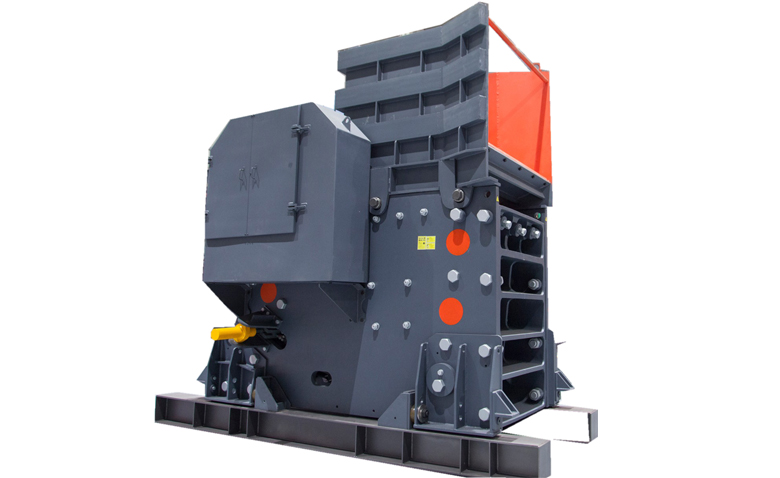
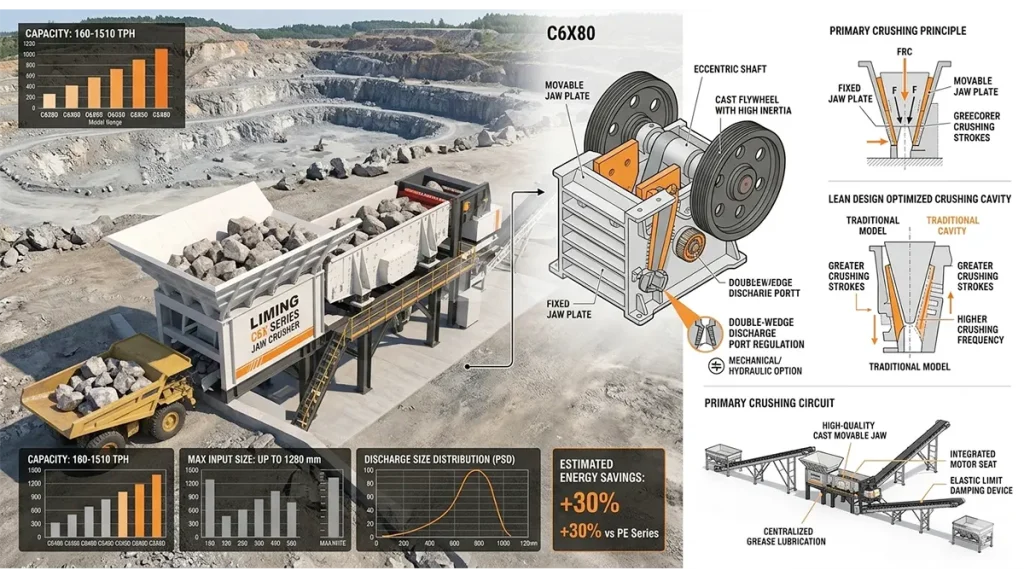
Igneous rocks are formed from cooled magma. They are crystalline, dense, and brutally hard. Granite, with its interlocking quartz and feldspar crystals, is the archetype. Processing this raw material is a war against abrasion. You must deploy a primary jaw crusher with high manganese steel composition (Mn18Cr2) to combat the friction. The C6X Jaw Crusher is engineered for this specific task; its heavy cast-steel frame and robust eccentric shaft absorb the violent kinetic shock of fracturing 190+ MPa rock.
Deploying an impact crusher on high-silica granite is a catastrophic financial error. The kinetic friction will literally melt high-chrome blow bars in a single shift. The secondary and tertiary stages must consist of multi-cylinder cone crushers like the HPT and HST series, which use inter-particle compression to grind the rock against itself, saving the liners from direct, high-velocity abrasion.
Sedimentary Rock: Limestone and Sandstone
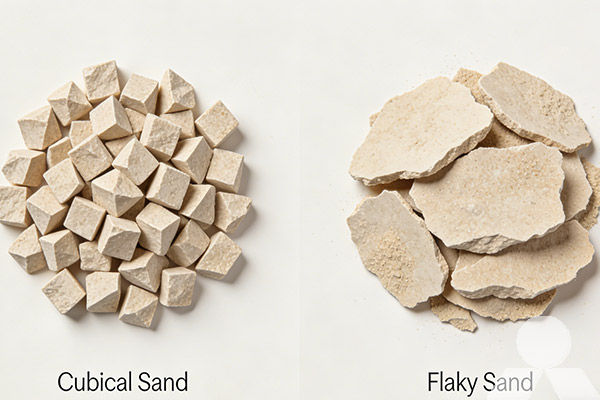
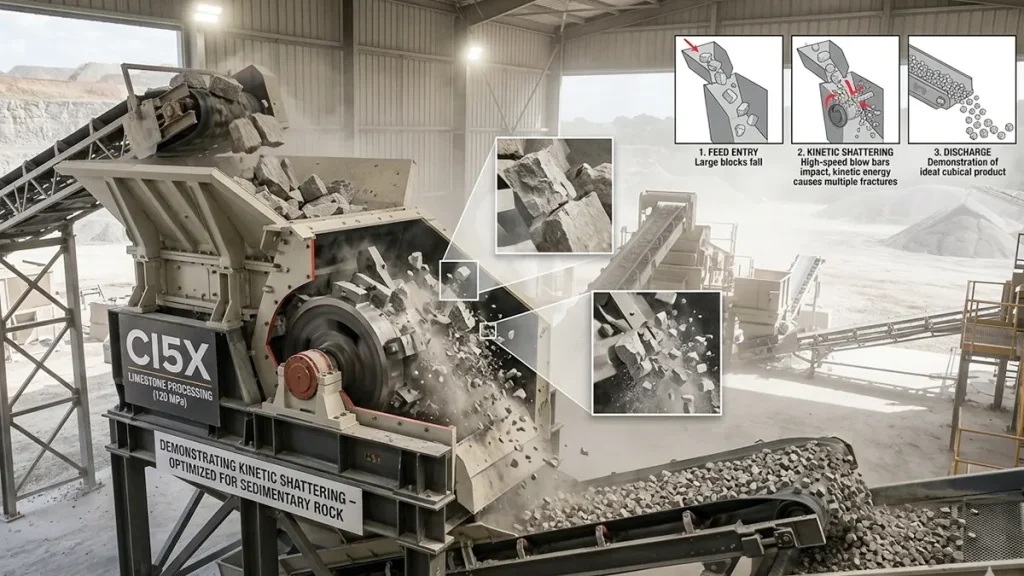
Sedimentary rocks like limestone are formed from compressed organic deposits. They are chemically reactive and possess a low compressive strength, typically below 150 MPa. This makes them perfect raw material for CI5X Impact Crushers. The kinetic impact shatters the soft rock along its natural bedding planes, producing a highly cubical aggregate ideal for concrete and asphalt batching.
However, the primary risk in sedimentary deposits is contamination. A field analysis of limestone from a quarry near Fujairah, UAE, revealed hidden clay seams running through the deposit. While the 120 MPa rock is easy to crush, failing to install a downstream XSD washing plant to strip the clay (which causes mud content to exceed 3%) results in catastrophic concrete bonding failure. The raw material isn't just the rock; it's everything embedded within it.
Metamorphic Rock: Quartzite and Marble
Metamorphic rocks are the most deceptive. They are igneous or sedimentary rocks that have been transformed by intense heat and pressure. Marble is relatively soft, but quartzite presents a unique challenge. Quartzite deposits in the Rajasthan region of India have a Mohs hardness of 7, equivalent to hardened steel. Their tightly interlocked quartz crystals give them an abrasion index that is off the charts.
Any circuit designed for quartzite must feature a multi-stage cone crushing loop (HPT/HST series) after the primary jaw. The rock's internal structure resists single-pass reduction and will destroy standard manganese liners through focused frictional heat. You must gradually reduce its size through multiple compressive stages to avoid mechanical overload.
The following table maps the raw material's geological origin directly to the required primary crushing physics.
| Raw Material Type | Key Example | Avg. Compressive Strength | Mandatory Primary Crusher | Underlying Physics |
|---|---|---|---|---|
| Igneous | Granite, Basalt | 180 - 250 MPa | C6X Series Jaw Crusher | Heavy Compression |
| Sedimentary | Limestone, Sandstone | 80 - 150 MPa | CI5X Series Impact Crusher | Kinetic Impact |
| Metamorphic (Hard) | Quartzite | >200 MPa (High Abrasion) | C6X Series Jaw Crusher | Heavy Compression |
Recycled Materials: Construction & Demolition (C&D) Waste
The final category of raw material is man-made. Processing C&D waste from a Sydney demolition site is a challenge defined by heterogeneity. The feed is an unpredictable mix of 100 MPa concrete, steel rebar, brick, asphalt, and wood. A primary PEW jaw crusher equipped with an overband magnetic separator is non-negotiable to extract the tramp iron before it shreds conveyor belts and destroys cone crushers. The most critical factor is the variable feed size, requiring a wide cavity and a robust eccentric shaft to prevent catastrophic blockages from oversized concrete slabs.
Field Warning: Geological Ignorance Guarantees Mechanical Failure
The mechanical reality is that a crusher is a geological tool. Its physics must be perfectly aligned with the raw material's origin story. If you attempt to process 190 MPa igneous granite with the kinetic impact physics of a CI5X, you are not crushing rock; you are intentionally vaporizing your capital assets. If you process soft, clay-rich sedimentary limestone without a downstream washing circuit, you are producing a contaminated product that will be rejected by every batching plant. The non-negotiable operational boundary is a mandatory geological assessment before a single machine is purchased. If you do not map the compressive strength and abrasion index of your deposit to the correct crushing mechanism, your plant will face catastrophic mechanical failure and financial ruin before the first ton of aggregate is even sold.
Stop Guessing on Rock Mechanics and Crusher Physics
"Match the crusher's physics to the rock's geology, or prepare for catastrophic failure." — From the Desk of your Material Scientist
Request Geological-Mechanical Audit
Chief Technical Consultant
15+ Years in Mineral Processing & Mining Machinery
Senior mechanical specialist at Liming Heavy Industry. Leading expert in large-scale crushing circuits and global quarry optimization. His technical insights have helped over 500+ global projects achieve higher efficiency.