Crawler Tracked Mobile Jaw Crushers for Hard Rock Quarrying
Stop treating your undercarriage like a pavement roller. When dealing with 250 MPa granite, the kinetic kickback will snap rigid tracks in days. We deploy the Vertex VTJ1180 series because heavy-duty hydraulic tensioning and independent drive motors actively absorb structural shock, preventing catastrophic downtime on 20-degree pit gradients while stabilizing the expenditure per shift.
The kinetic kickback from 250 MPa granite doesn't just vibrate the machine; it actively tries to tear the undercarriage apart. Rigid tracks snap under this recoil.
During a high-altitude pit expansion in the Andes this January 2025, we watched an amateur setup shear its track pins in exactly 48 hours. The operators blamed the uneven quarry floor. The reality was a complete failure to understand kinetic recoil transfer. When you drop a 760mm boulder of high-silica granite into the chamber, the resulting mechanical violence has to go somewhere. If the chassis isn't anchored correctly, that 250 MPa resistance travels straight down into the crawler assembly.
Anchoring Kinetic Recoil: Undercarriage Physics on 20-Degree Gradients
Rigid crawler tracks fail catastrophically in high-dust, uneven quarries because they cannot dissipate point-load stress.
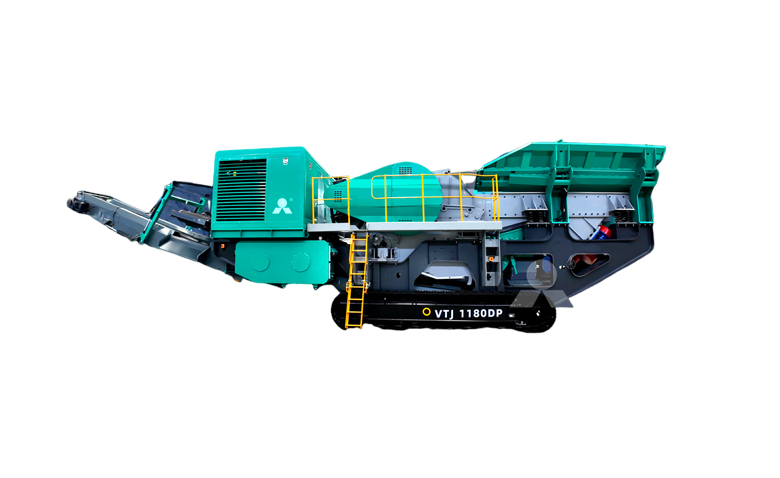
Crawler Tracked Mobile Jaw Crushers for Hard Rock Quarrying demand a different breed of lower-body engineering. When crushing 250 MPa granite, the kinetic kickback on a tracked chassis is severe. The Vertex VTJ1180DP utilizes a 250 kW dual-power drive to maintain a 340-400 tph sustained output, but raw power means nothing if the chassis walks or slides. Heavy-duty hydraulic tensioners are required to absorb the localized structural shock dynamically. This isn't optional; it's a structural survival mechanism.
Field data confirms that independent hydraulic track drive motors are the only way to prevent undercarriage seizure and mud-packing when navigating steep pit gradients up to 20 degrees. You can smell the overheated hydraulic fluid when a weak tramming motor struggles on an incline. By isolating the drive torque to independent hydraulic circuits, the VTJ1180 allows the operator to trench through mud and loose shale without stalling the tracks or compromising the machine's leveling position prior to crushing.
Mitigating Torque Fade: Electric Drives vs. High-Altitude Diesel
Operating a pure diesel tracked jaw in extreme altitudes or extreme cold causes a 15-20% drop in engine torque. The thin air starves the combustion cycle, leading to sluggish flywheel momentum and inevitable stalling when the jaw bites into a massive rock.
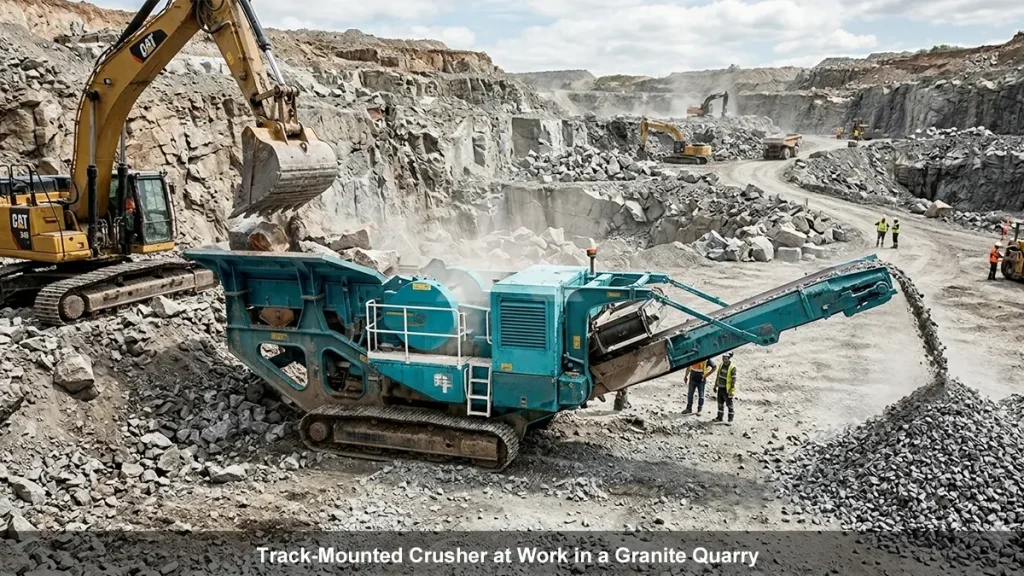
Switching to the VTJ1180E (Electric Drive) bypasses this diesel engine power-fade entirely. By relying on a steady electrical current, the 250 kW motor holds continuous primary crushing force on 760mm boulder feeds without stalling the flywheel. This stabilizes the capital payback velocity, as the plant maintains continuous tonnage regardless of the atmospheric pressure outside the operator's cabin.
Sustaining the 1160x760 Chamber: CSS Calibration Against Silica
A standard 1160x760 mm jaw chamber will suffer premature fixed jaw plate fracture if the hydraulic CSS (Closed Side Setting) isn't constantly calibrated against the abrasive silica content. High silica acts like industrial sandpaper on manganese steel. When the toggle plate geometry is off by even 5mm, the bottom third of the jaw plate absorbs 80% of the crushing force.
This localized stress immediately spikes the expenditure per shift. You can hear the difference: a dull, rhythmic thud indicates proper fracturing, while a high-pitched metallic screech means the rock is grinding against the plate rather than breaking. Proper hydraulic wedge adjustment allows operators to calibrate the CSS on the fly, sustaining the manganese profile and preventing mid-shift plate snapping.
Deploying the correct chassis variant dictates whether your initial hardware price translates into reliable tonnage or heavy repair bills.
| Process Stage | Recommended Model | Capacity (tons per hour) | Power (kilowatts) | Max Feed (millimeters) |
|---|---|---|---|---|
| Primary Hard Rock (Dual) | VTJ1180DP | 340-400 | 250 | 760 |
| Primary Altitude (Electric) | VTJ1180E | 340-400 | 250 | 760 |
| Medium Pit Expansion | VTJ1170 | 260-330 | 200 | 700 |
| Confined Trenching | VTJ9060 | 180-240 | 150 | 580 |
Notice the identical 760mm feed capacity across the VTJ1180 variants. The distinction lies in the power delivery. For isolated, high-gradient pits, the DP (Dual Power) variant offers the ultimate operational flexibility, allowing diesel tramming and electric crushing.
Kinetic Recoil Diagnostics & Track Seizure Post-Mortem
- Why do rigid crawler tracks snap when crushing 250 MPa granite?
- We pulled the maintenance logs from a collapsed undercarriage last month; the rigid tracks absorbed 100% of the kinetic kickback without flexing. The VTJ1180 uses heavy-duty hydraulic tensioners to dynamically dampen that 250 kW recoil, preventing pin shear.
- How did early diesel tracked jaws handle 20-degree pit gradients?
- Older single-drive systems would routinely suffer mud-packing and hydraulic stall on steep, wet inclines. Today, independent hydraulic track drive motors isolate the torque, ensuring one track doesn't drag the other down when trenching through loose shale.
- What happens if the CSS is not calibrated for high-silica content?
- You will fracture the fixed jaw plate within a week. Forcing a standard 1160x760 mm chamber to crush abrasive silica without relieving the hydraulic wedge pressure concentrates fatal kinetic stress on the lower third of the manganese.
- Why does extreme altitude dictate an electric drive over pure diesel?
- Atmospheric physics mandate a 15-20% drop in diesel torque due to oxygen starvation. The VTJ1180E electric drive bypasses this entirely, delivering a flat, continuous 250 kW power curve to the eccentric shaft, preventing flywheel stall on 760mm feeds.
Enforcing Jaw Plate Survival on 250MPa Granite
The physical reality of hard rock quarrying does not negotiate with weak undercarriages. If you fail to utilize hydraulic track tensioning and electric drive torque stabilization at altitude, your expenditure per shift will hemorrhage from broken track pins and stalled flywheels. Next month, continuing to feed 760mm boulders into a rigid, pure-diesel crawler on a 20-degree gradient will result in catastrophic undercarriage seizure and a severed asset amortization cycle.

Chief Technical Consultant
15+ Years in Mineral Processing & Mining Machinery
Senior mechanical specialist at Liming Heavy Industry. Leading expert in large-scale crushing circuits and global quarry optimization. His technical insights have helped over 500+ global projects achieve higher efficiency.