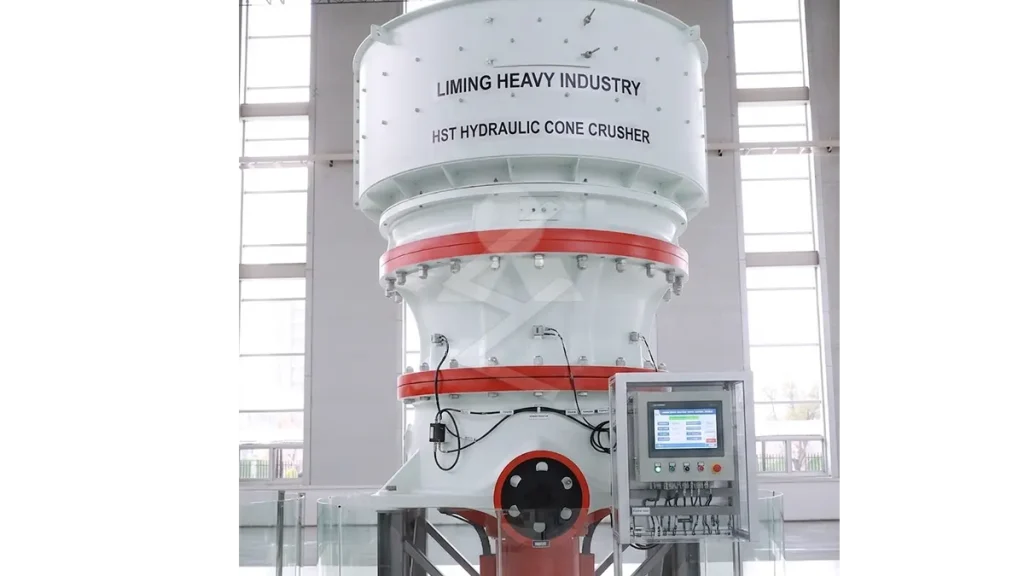
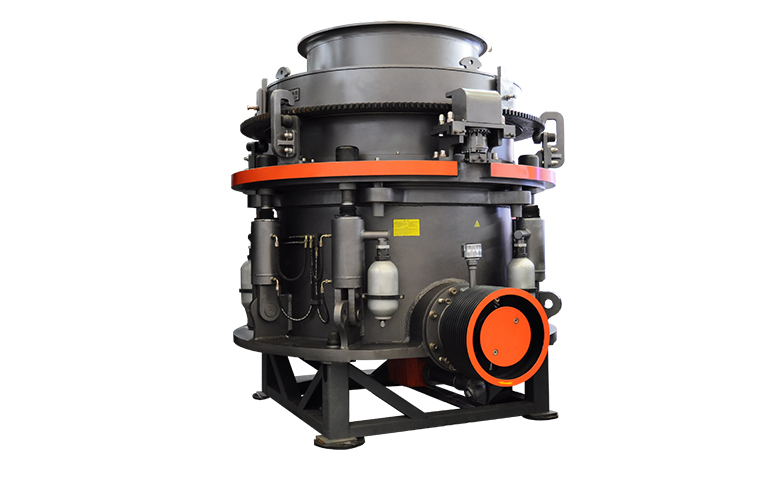
HST Single Cylinder Hydraulic Cone Crusher: Why Choose It for High-Capacity Plants?
This article explains the technical superiority of the HST series (Single Cylinder) focusing on its automation (PLC), ease of maintenance, and suitability for the previously discussed 450tph line.
In modern aggregate production, efficiency isn't just about raw power; it's about intelligence and control. As discussed in our previous guide on the 450tph production line, the secondary crushing stage determines the quality of your final product and the operational cost of the entire plant. This is where the HST Single Cylinder Hydraulic Cone Crusher stands out as a game-changer.
Traditional spring cone crushers often struggle with precise adjustment and require significant downtime for maintenance. Liming Heavy Industry developed the HST Series to solve these pain points. By integrating mechanical, hydraulic, electrical, and automated control technologies, the HST Single Cylinder Hydraulic Cone Crusher offers a level of efficiency that traditional models cannot match. This guide explores why it is the preferred choice for medium-to-large scale quarries.
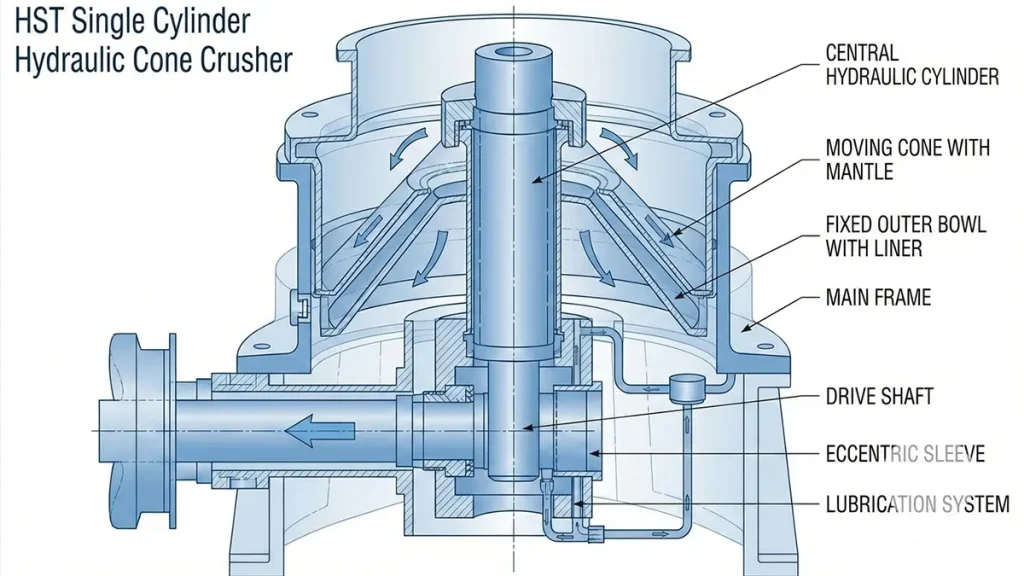
How the HST Single Cylinder Hydraulic Cone Crusher Works
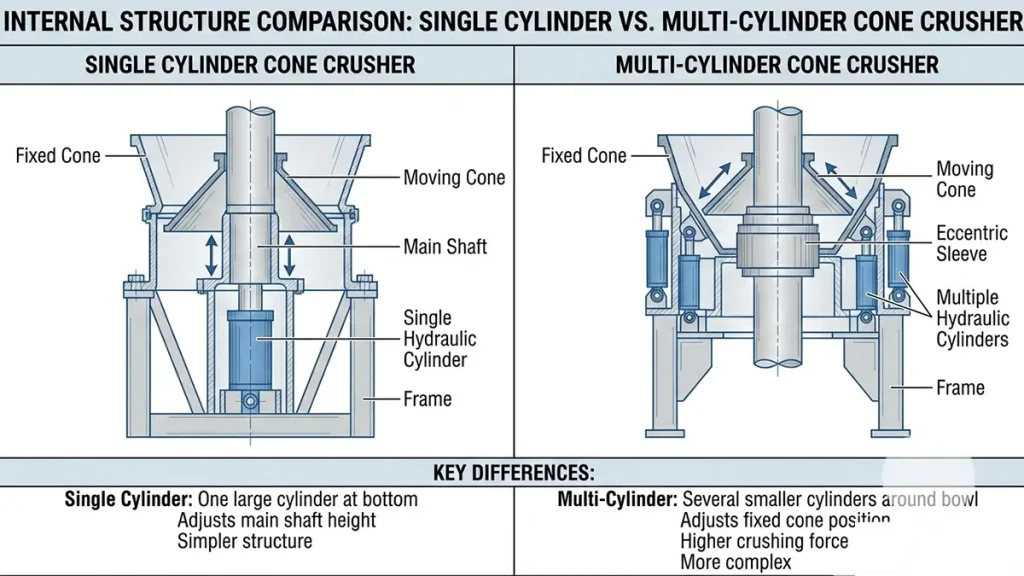
Unlike multi-cylinder crushers that use a complex network of cylinders for release and clearing, the HST series relies on a single, robust hydraulic cylinder at the bottom. This unique design simplifies the structure while enhancing performance.
The core working principle involves:
- Hydraulic Support: The single cylinder supports the main shaft and adjusts the mantle's position.
- Lamination Crushing: The crushing walls engage the rock layers, crushing stone against stone (lamination), which produces a superior cubical shape compared to simple compression.
- PLC Control: The entire operation is monitored by a computerized system that automatically adjusts the discharge opening to maintain constant power and throughput.
Key Advantages in a 450TPH Production Line
When running a high-capacity plant (450tph or higher), reliability is paramount. Here is why the HST Single Cylinder Hydraulic Cone Crusher is the optimal configuration:
1. Fully Automated Control System
The HST series comes standard with a touch-screen PLC control system. It monitors oil temperature, pressure, and current load in real-time. If the crusher encounters uncrushable material (like iron), the system automatically lowers the spindle to release the obstruction and then resets—all without manual intervention.
2. High Efficiency & High Capacity
The steep crushing cavity design and high swing frequency allow for a massive throughput. A single HST unit can often do the work of two older spring cone crushers, saving space and energy.
3. "Set It and Forget It" Maintenance
Maintenance is the biggest hidden cost in quarrying. The HST design eliminates the "spider bearing" found in gyratory crushers and minimizes moving parts. All maintenance can be performed from the top or side, meaning you don't need to dismantle the entire machine to replace liners.
Technical Specifications: HST Series
Below are the specifications for the most popular models used in our 450tph solutions (HST 250 and HST 315).
| Model | Max Feed Size (mm) | Min Discharge Setting (mm) | Capacity (t/h) | Power (kW) |
|---|---|---|---|---|
| HST 160 | 160-260 | 10 | 46 - 300 | 160 |
| HST 250 (Recommended) | 190-330 | 13 | 95 - 540 | 250 |
| HST 315 | 240-390 | 13 | 140 - 790 | 315 |
FAQ: Single Cylinder vs. Others
1. What is the difference between Single Cylinder and Multi-Cylinder Cone Crushers?
The HST Single Cylinder Hydraulic Cone Crusher is generally simpler, easier to control automatically, and has a larger feed opening, making it excellent for secondary crushing. Multi-cylinder crushers (like our HPT series) often have higher crushing forces and are better suited for tertiary crushing (making fine sand) or processing extremely hard ores.
2. Can the HST crusher produce sand?
Yes, by equipping the HST with a "Fine" cavity liner, it can produce a significant amount of fine material (0-5mm). However, for dedicated sand making, a VSI (Vertical Shaft Impact) crusher is usually recommended as a follow-up stage.
3. How often do the liners need replacing?
This depends on the abrasiveness of your stone (Silica content). Generally, the HST's lamination crushing principle reduces liner wear compared to older technologies. Liming uses high-manganese steel alloys to further extend wear life.
Upgrade to Intelligent Crushing
The era of manual adjustment and frequent downtime is over. By integrating the HST Single Cylinder Hydraulic Cone Crusher into your plant, you ensure that your 450tph production goals are met day in and day out. It offers the perfect balance of raw power, intelligent control, and ease of maintenance.

Chief Technical Consultant
15+ Years in Mineral Processing & Mining Machinery
Senior mechanical specialist at Liming Heavy Industry. Leading expert in large-scale crushing circuits and global quarry optimization. His technical insights have helped over 500+ global projects achieve higher efficiency.