Two Stage Stone Crusher Plant Configuration
This article provides a deep dive into the technical and economic aspects of a two-stage crushing setup, specifically tailored for B2B buyers looking to balance CAPEX and long-term OPEX.
For quarry owners and mining engineers in Africa, Southeast Asia, and South America, the biggest challenge isn't just breaking rocks—it’s doing so profitably. High energy costs, frequent wear-part replacements, and inconsistent product shape can quickly turn a promising project into a financial burden. Choosing the right two stage stone crusher plant configuration is the most critical decision you will make to ensure operational efficiency and long-term durability.
At Liming Heavy Industry, we specialize in engineering high-performance crushing solutions that minimize downtime. Whether you are processing hard granite or abrasive basalt, a well-planned two-stage circuit provides the perfect balance between initial investment and output quality.
Why Choose a Two Stage Stone Crusher Plant Configuration?
In the world of aggregate production, "two-stage" refers to a process where material is reduced in size through two distinct crushing phases: Primary and Secondary. This configuration is the industry standard for medium-to-hard materials because it distributes the crushing ratio effectively, reducing the mechanical stress on any single machine.
- Reduced Wear: By splitting the reduction ratio, you prevent the over-working of liners and mantles.
- Better Grain Shape: Secondary crushing (especially with cone or impact crushers) improves the cubical shape of the final aggregate.
- Scalability: Two-stage plants are easier to upgrade with a third stage (VSI crusher) if market demand for manufactured sand increases.
Core Components of a Professional Two-Stage Setup
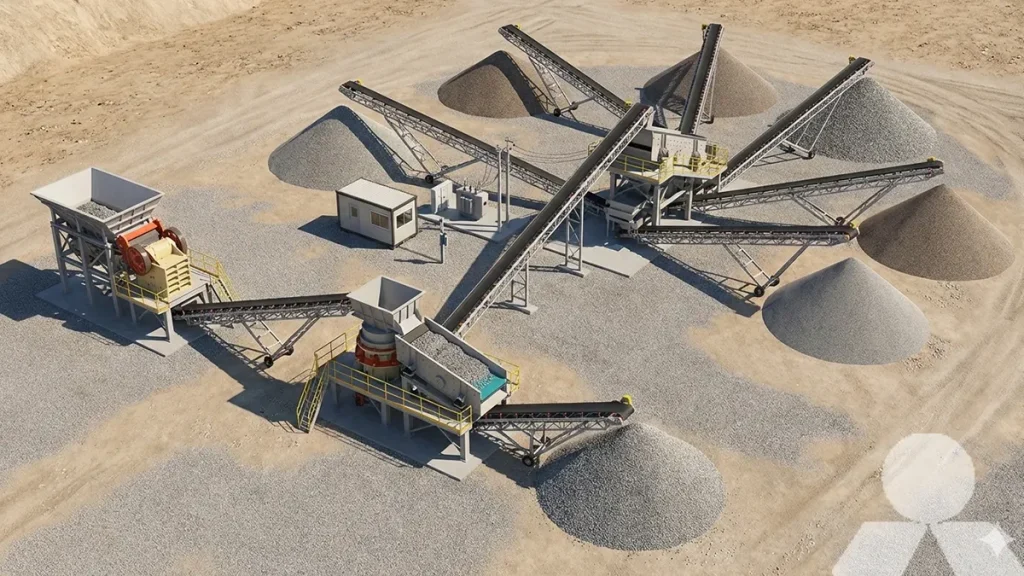
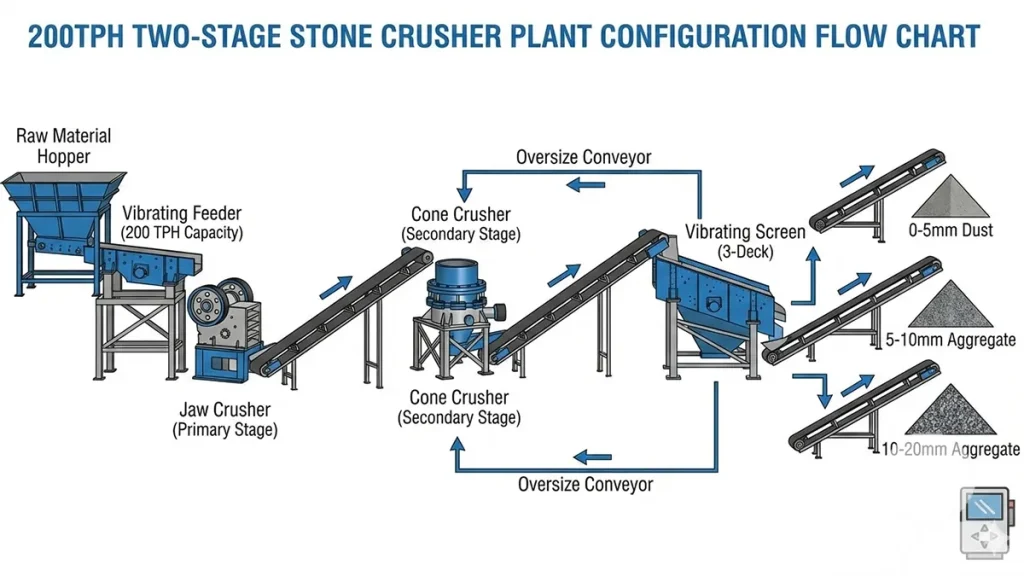
A standard two stage stone crusher plant configuration typically consists of four main modules: Feeding, Crushing (Stage 1), Crushing (Stage 2), and Screening.
1. Primary Crushing Stage: The Muscle
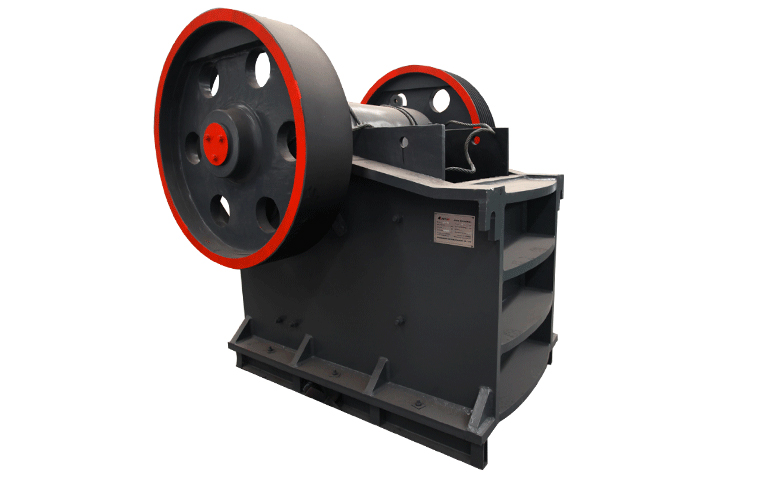
The goal here is to take "Run of Mine" (ROM) material and reduce it to a manageable size. For almost all two-stage plants, the Jaw Crusher is the undisputed king. Liming’s PE series jaw crusher and PEW series jaw crusher is designed to handle high-pressure environments with ease.
2. Secondary Crushing Stage: The Refiner
Depending on the hardness of your rock, you have two main choices for the second stage:
- Cone Crusher: Best for hard materials (Granite, Basalt, Quartz). It offers high efficiency and low operating costs.
- Impact Crusher: Best for soft to medium-hard materials (Limestone, Gypsum). It produces excellent cubical shapes but has higher wear costs on hard rock.
Technical Specifications: 200-250 TPH Configuration Example
Below is a typical configuration for a medium-sized quarry operation targeting 200-250 tons per hour (TPH).
| Process Stage | Equipment Model (Liming) | Function |
|---|---|---|
| Feeding | GZD1100×4200 | Evenly feeds raw material; removes soil/fines. |
| Primary Crushing | PE750×1060 Jaw Crusher | Reduces 600mm boulders to <150mm. |
| Secondary Crushing | HST220 Cone Crusher | Produces final sizes (e.g., 0-5mm, 5-10mm, 10-20mm). |
| Screening | 2YZS2160 Vibrating Screen | Separates material into different sizes for sale. |
Optimizing Your Layout for Efficiency
A common mistake in two stage stone crusher plant configuration is poor site layout. To maximize your ROI, consider the following:
Gravity-Assisted Feeding
Whenever possible, use the natural terrain. Placing the primary feeder on a higher elevation reduces the energy required by conveyors and simplifies truck access.
Closed-Loop vs. Open-Loop
In a closed-loop system, oversized material from the screen is sent back to the secondary crusher. This ensures 100% of your output meets the size specification, which is vital for high-quality construction contracts.
Success Story: 150TPH Basalt Crushing in Nigeria
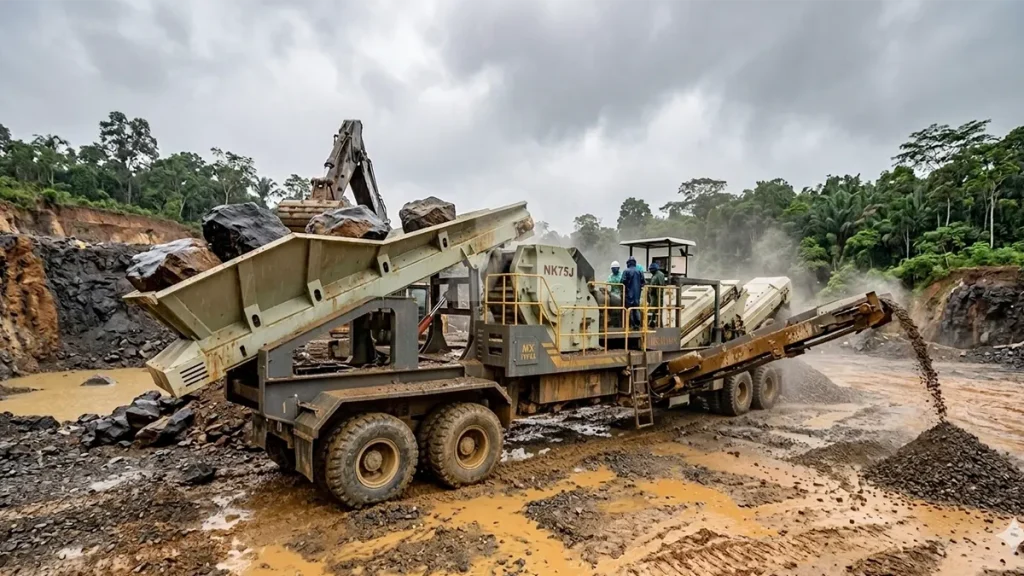
A client in Lagos required a durable setup for extremely hard basalt. We implemented a two stage stone crusher plant configuration featuring our HJ Series High-Efficiency Jaw Crusher and an HP Series Multi-cylinder Hydraulic Cone Crusher.
- The Challenge: High abrasion causing weekly downtime for competitor machines.
- The Solution: Liming's hydraulic adjustment system allowed the client to clear the crushing chamber quickly and adjust settings without stopping production.
- The Result: 20% increase in production and a 15% reduction in electricity consumption per ton.
Frequently Asked Questions (FAQ)
1. What is the difference between a one-stage and a two stage stone crusher plant configuration?
A one-stage plant (usually using an impact crusher) is cheaper initially but only works for soft rocks. A two-stage plant uses a jaw crusher first, allowing it to process much harder materials with lower maintenance costs over time.
2. Can I use two jaw crushers for a two-stage plant?
While possible, it is not recommended. Jaw crushers are great for primary reduction but poor at creating the cubical shape required for modern concrete. A cone or impact crusher is almost always better for the second stage.
3. How much space do I need for a 200TPH two-stage plant?
A typical 200TPH stationary plant requires approximately 1,500 to 3,000 square meters, depending on the number of stockpiles and truck maneuvering space required.
Investing in the right two stage stone crusher plant configuration is about more than just buying machines; it's about engineering a system that works for your specific geology and business goals. By pairing a robust primary jaw crusher with a precision secondary crusher, you ensure high uptime and a product that meets the strictest international standards.

Chief Technical Consultant
15+ Years in Mineral Processing & Mining Machinery
Senior mechanical specialist at Liming Heavy Industry. Leading expert in large-scale crushing circuits and global quarry optimization. His technical insights have helped over 500+ global projects achieve higher efficiency.