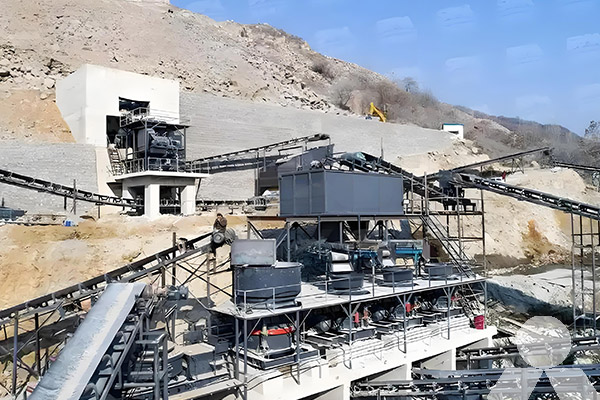
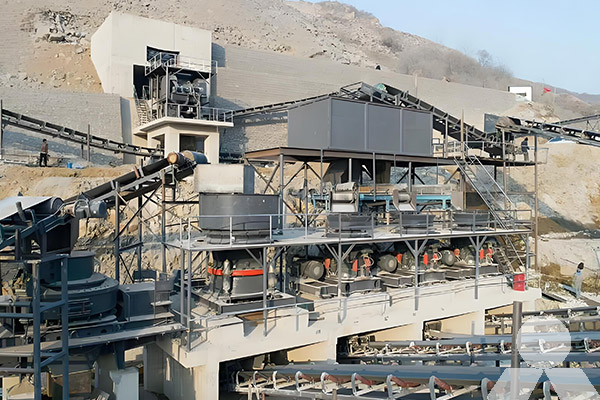
400 TPH Basalt Production Line Cost Price & Setup Guide
A comprehensive, technical industry solution guide detailing the configuration, required equipment, cost factors, and ROI for setting up a 400 ton-per-hour basalt crushing production line. Aimed at quarry owners and contractors in global markets.
For quarry owners and mining contractors, processing highly abrasive and hard rock like basalt presents a unique set of challenges. The primary pain points are usually rapid wear of crusher parts, high maintenance downtime, and massive operational expenses. Therefore, understanding the true 400th basalt production line cost price is crucial before making any capital investment. A 400 ton-per-hour (t/h) capacity is a heavy-duty industrial scale, requiring equipment that can withstand immense stress while delivering high-quality aggregates.
At Liming Heavy Industry, we specialize in engineering robust, high-efficiency crushing solutions specifically designed for hard rock. In this comprehensive guide, we will break down the ideal equipment configuration, process flow, and the exact factors that influence the total cost and ROI of a 400 t/h basalt plant.
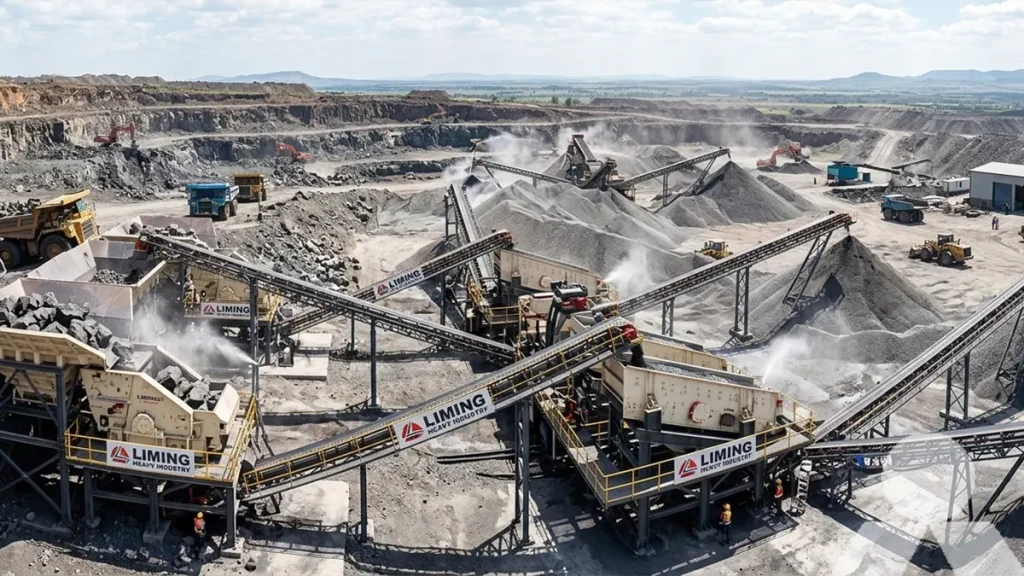
Why Basalt Requires a Specialized Crushing Strategy
Basalt is an extrusive igneous rock known for its high compressive strength (often exceeding 200 MPa) and high silica content. This makes it incredibly abrasive. If you use standard limestone crushing equipment (like impact crushers) for basalt, your wear parts (blow bars, impact plates) will wear out in a matter of days, sending your operational costs through the roof.
To keep the long-term 400th basalt production line cost price manageable, Liming Heavy Industry strongly recommends a "Jaw Crusher + Cone Crusher" configuration. This combination utilizes the principle of lamination crushing, which significantly reduces the wear and tear on manganese steel parts when handling abrasive materials.
Optimal Process Flow for a 400 t/h Basalt Plant
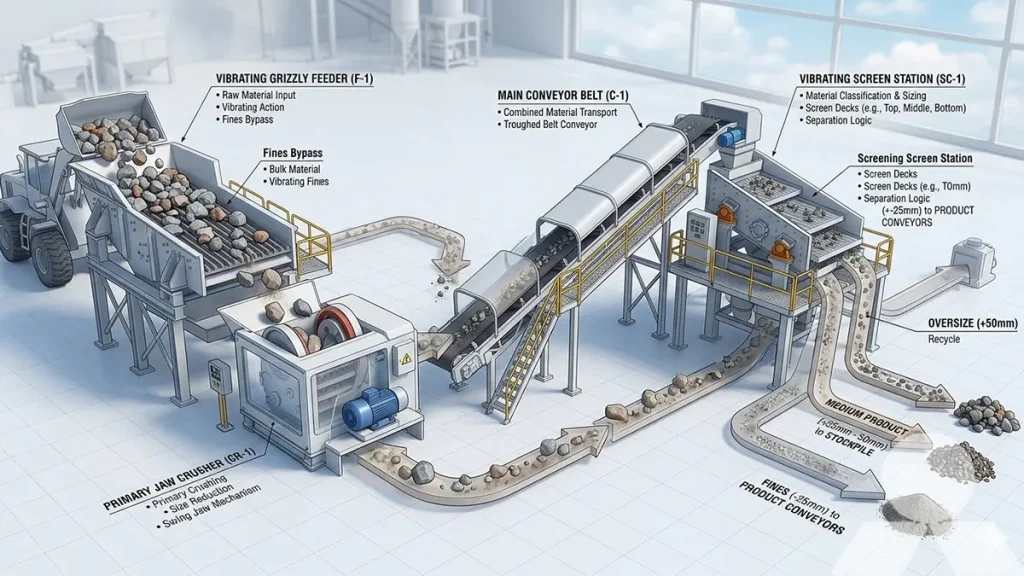
A well-designed flow chart is the foundation of an efficient quarry. For a 400 t/h output requirement, the standard process flows as follows:
- Primary Crushing: Raw basalt blasted from the mountain is fed into a primary Jaw Crusher via a Vibrating Feeder. The jaw crusher reduces the large boulders (up to 800mm) down to a manageable size (around 150-200mm).
- Secondary Crushing: The primary crushed material is conveyed to a multi-cylinder hydraulic Cone Crusher. This machine is the workhorse of the hard rock plant, reducing the stone to intermediate sizes.
- Tertiary Crushing & Shaping (Optional but Recommended): For high-grade construction aggregates, the material is fed into a Vertical Shaft Impact (VSI) Crusher to eliminate elongated and flaky particles, producing perfectly cubic sand and gravel.
- Screening: Vibrating screens separate the crushed basalt into distinct final product sizes (e.g., 0-5mm, 5-10mm, 10-20mm, 20-31.5mm). Oversized rocks are sent back to the cone crusher in a closed circuit.
Core Equipment List and Specifications
To achieve a reliable 400 tons per hour, Liming Heavy Industry recommends the following heavy-duty equipment configuration. Note that specific models can be adjusted based on the exact feed size and desired final product sizes.
| Stage | Equipment Type | Recommended Model | Max Feed Size (mm) | Capacity (t/h) | Role in the Line |
|---|---|---|---|---|---|
| Feeding | Vibrating Feeder | TSW1345 | ≤ 800 | 400 - 600 | Provides continuous, even feeding to the primary crusher while pre-screening dirt. |
| Primary Crushing | PEW Series Jaw Crusher | PEW860 | ≤ 720 | 280 - 650 | Handles the bulk initial reduction of massive basalt boulders. |
| Secondary Crushing | HPT Hydraulic Cone Crusher | HPT300 (x2 units) | ≤ 210 | 200 - 450 (each) | Utilizes multi-cylinder hydraulics for massive crushing force on hard rock. |
| Screening | Vibrating Screen | 3YK3072 (x2 units) | ≤ 200 | 200 - 800 | High-efficiency separation of final aggregates into multiple commercial sizes. |
Analyzing the 400th Basalt Production Line Cost Price
When investors ask for the price of a production line, they often only think of the machinery. However, a comprehensive ROI analysis requires looking at three distinct cost categories:
1. Initial Equipment Investment
This is the capital expenditure for purchasing the crushers, screens, feeders, conveyors, and centralized electrical control panels. Depending on whether you choose standard models or advanced European-type models (like the C6X Jaw Crusher or HPT Cone Crusher), this core equipment cost will vary. Advanced models have a higher upfront cost but offer significantly lower maintenance costs down the line.
2. Infrastructure and Installation Costs
Setting up a 400 t/h plant requires substantial civil engineering. You must account for:
- Concrete foundations and retaining walls.
- Steel structures and walkways for maintenance.
- Electrical cabling, transformers, and water systems for dust suppression.
- Freight, logistics, and professional installation engineering teams.
3. Long-Term Operational Expenses (OPEX)
For basalt, OPEX is where cheap equipment will bankrupt a quarry. Your OPEX includes:
- Power Consumption: A 400 t/h line requires substantial kW power. Liming’s optimized motor designs help reduce electricity usage per ton.
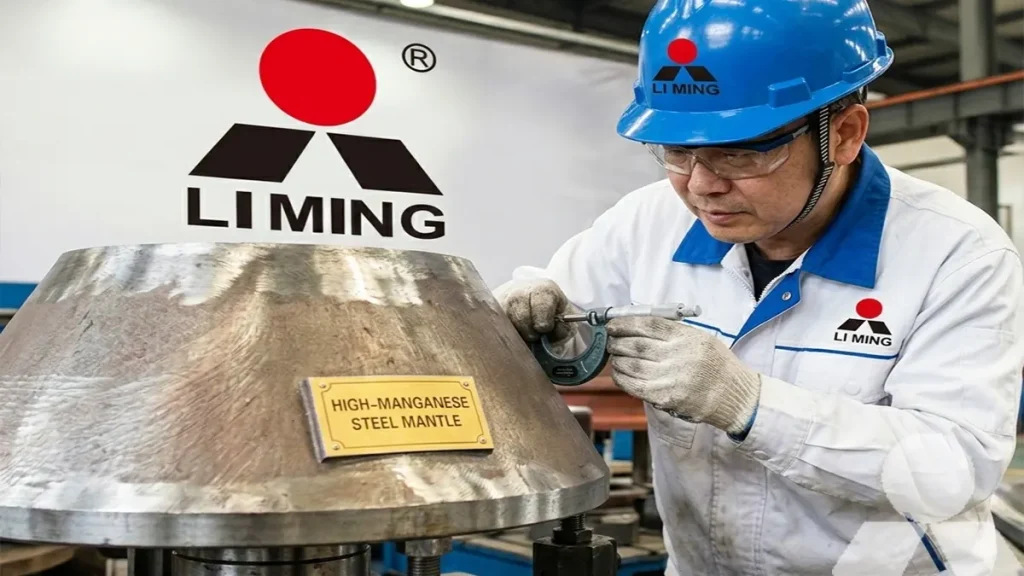
- Wear Parts Replacement: Because basalt is abrasive, jaw plates and cone mantles/bowls will wear out. Using Liming’s high-manganese steel parts extends replacement cycles by 30-50%.
- Labor Costs: Liming plants feature PLC automated control systems, reducing the need for manual labor and oversight.
Liming Heavy Industry Advantages & ROI
Choosing Liming Heavy Industry for your 400 t/h basalt plant guarantees a faster return on investment (ROI). Our multi-cylinder hydraulic cone crushers are designed specifically for hard rock, ensuring high throughput and excellent aggregate shape without the constant downtime associated with lesser brands.
Because the global demand for high-strength concrete aggregates (which utilize basalt) is surging in infrastructure projects across Southeast Asia, Africa, and South America, a properly configured Liming plant can often see a full ROI within 8 to 14 months of continuous operation, depending on local aggregate market prices.
Frequently Asked Questions (FAQ)
1. What is the estimated 400th basalt production line cost price?
The total price varies heavily based on the exact configuration (e.g., adding a VSI crusher for shaping, or environmental dust collectors). Generally, a high-quality 400 t/h plant ranges from several hundred thousand to over a million US dollars. We provide precise, customized quotes based on your exact site conditions.
2. Can I use an Impact Crusher instead of a Cone Crusher for basalt?
While possible, it is highly discouraged. Basalt's high silica content will destroy the blow bars of an impact crusher in a few days. The operational cost of replacing these parts will quickly eclipse the initial savings of buying an impact crusher. A Cone Crusher is the industry standard for basalt.
3. How much land area is required for a 400 t/h crushing plant?
A plant of this scale typically requires an area of at least 3,000 to 5,000 square meters to comfortably accommodate the equipment, conveyors, raw material stockpiles, and finished product stockpiles, as well as maneuvering room for heavy loaders and trucks.
Investing in a high-capacity quarry operation requires careful planning and the right technology. By understanding the factors that dictate the 400th basalt production line cost price, you can make an informed decision that balances upfront investment with long-term profitability. By leveraging Liming Heavy Industry's robust jaw and cone crusher configurations, you guarantee maximum uptime, superior aggregate quality, and lower maintenance costs.
Contact Liming Heavy Industry today for a customized site plan, 3D flow chart, and a detailed price list tailored to your specific quarry project!

Chief Technical Consultant
15+ Years in Mineral Processing & Mining Machinery
Senior mechanical specialist at Liming Heavy Industry. Leading expert in large-scale crushing circuits and global quarry optimization. His technical insights have helped over 500+ global projects achieve higher efficiency.