Track Mounted vs Wheeled Mobile Crushing Plant Comparison
The financial gap between crawler and pneumatic chassis designs dictates your asset amortization cycle. Tracked plants eliminate secondary hauling at the blast face, while wheeled units drastically lower the upfront equipment price. This fiscal audit deconstructs the expenditure per shift for both mobility paradigms to protect your capital viability.
Track Mounted vs Wheeled Mobile Crushing Plant Comparison: A Fiscal Audit
- Capital Velocity: Wheeled (pneumatic) chassis drastically reduce the initial capital outlay and utilize standard semi-trucks, bypassing specialized low-bed trailer rentals for highway projects.
- Operational Deployment: Tracked (crawler) plants exert a minimal 0.08 MPa ground pressure, crawling directly to active blast faces to eliminate secondary dump truck hauling expenditures.
- Energy Amortization: Dual-power tracked configurations bypass diesel dependency, utilizing 415V municipal grids to accelerate the payback window by up to 14 months in urban sectors.
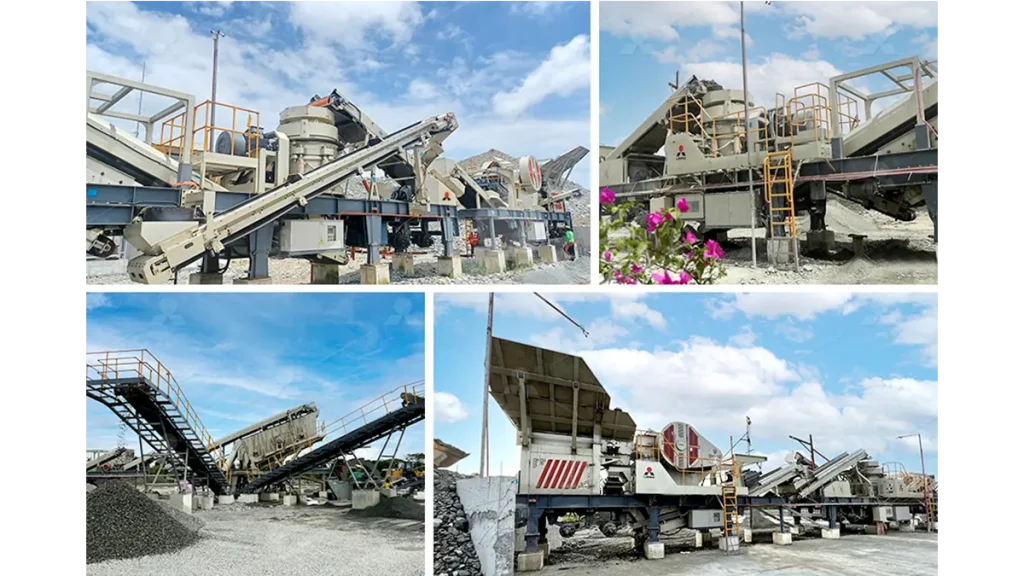
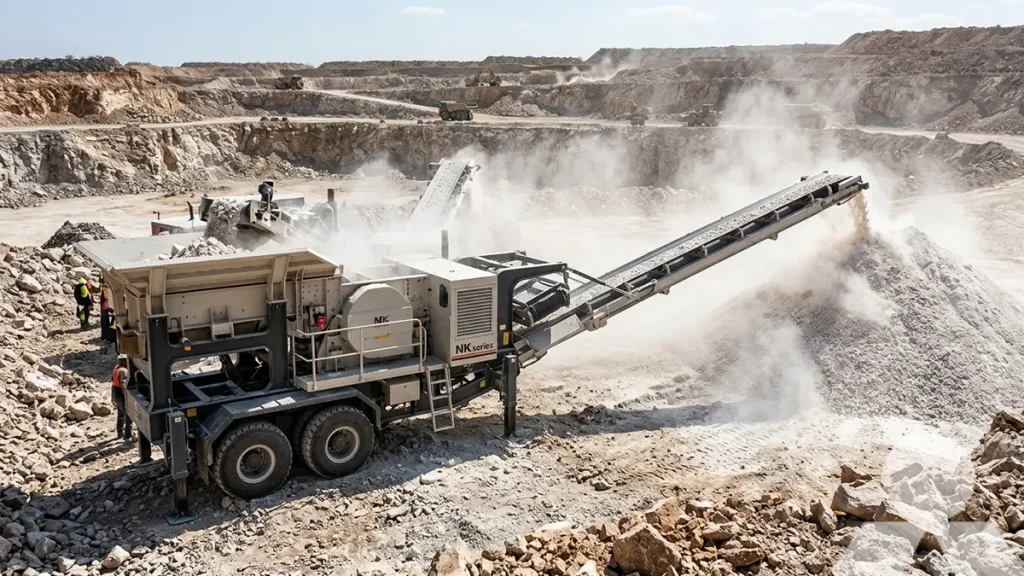
During a recent fiscal audit of the A104 highway expansion in Kenya, the logistical math brutally penalized contractors who misaligned their chassis selection. By utilizing standard semi-trucks for site-to-site relocation, the site manager deploying a pneumatic-tired NK1213C impactor completely bypassed the $1,250 daily specialized low-bed trailer rentals required for tracked units. The wheel-mounted chassis transitioned from transport mode to a 250 tph operational state in exactly 18.5 hours. This rapid deployment bypassed 20 days of standard concrete foundation curing, entirely arresting the capital stagnation that typically paralyzes primary crushing investments.
Logistical Expenditure Per Shift on Pneumatic-Tired Chassis
Pneumatic-tired mobility transforms rigid capital assets into liquid production units across paved or compacted infrastructure.
The upfront equipment price of the NK and K3 Series wheel-mounted plants sits significantly lower than their crawler-mounted counterparts. This fiscal reality stems from the elimination of heavy hydraulic undercarriages and track motors. You are paying purely for the crushing mechanism rather than the mobility mechanism. On major highway expansions or linear infrastructure projects, the crushing plant must relocate every few weeks to keep pace with the paving crews. Hiring a standard semi-truck to tow the kingpin-equipped NK chassis costs a fraction of mobilizing a heavy-haul flatbed convoy.
Do not ignore the setup velocity. Every hour a machine sits idle during relocation, your production-to-cost ratio plummets. The NK series relies on hydraulic leveling legs rather than poured concrete. This mechanical independence from civil works means the initial capital outlay begins paying itself back the moment the trailer disconnects.
Arresting Profit Leaks at the Blast Face: The Crawler Advantage
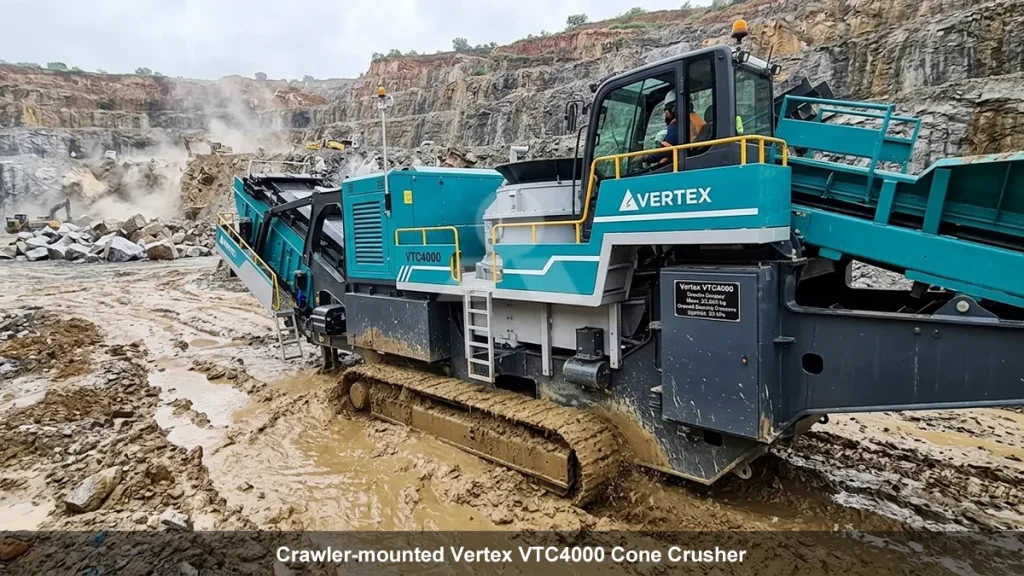
Evaluating an aggregate pit in East Kalimantan during the monsoon season revealed the brutal financial reality of chassis selection. Pneumatic wheeled plants were paralyzed in 400mm deep mud, halting all revenue generation and triggering massive daily running costs. The suction of the wet clay physically gripped the tires, rendering the plants immovable without heavy winch support.
Deploying the Vertex VTC4000 tracked cone crusher immediately reversed the negative cash flow. Crawlers distribute the massive weight of a 315 kW crushing plant across heavy steel tracks, exerting a minimal 0.08 MPa ground bearing pressure. The machine crawled directly to the active blast face. This physical proximity eliminated three dump trucks from the transfer circuit, cutting the material handling expenditure by $0.14 per processed unit. The asset amortization cycle accelerates exponentially when you eliminate the diesel burned by secondary haulers.
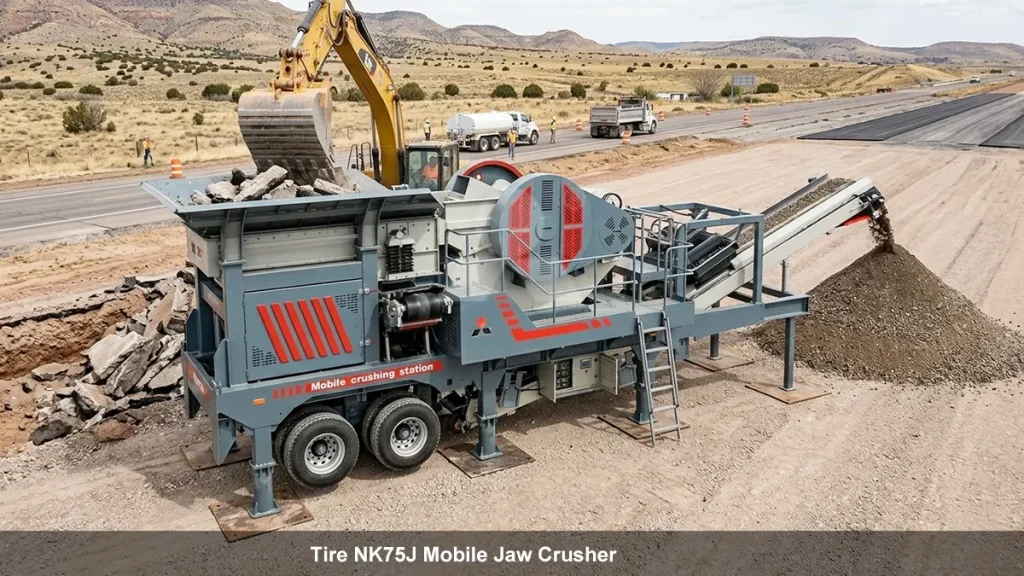
To accurately project the financial boundaries of your operation, we have engineered the following strict chassis comparison matrix. This isolates the physical capabilities from the fiscal impact.
Matching the capacity metric to the mounting type directly dictates your daily fuel and power expenses.
| Process Stage | Recommended Model | Capacity (tons per hour) | Power (kilowatts) | Mounting Type |
|---|---|---|---|---|
| Primary / Secondary | NK1213C | 150-300 | 228.5 | Pneumatic/Tire-mounted |
| Secondary Hard Rock | VTC4000 | 340-400 | 315 | Crawler/Pure Diesel |
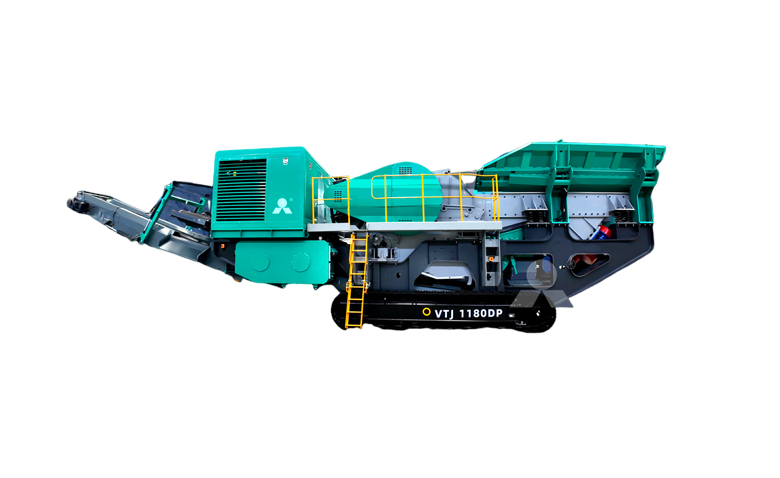
| Primary Urban Demolition | VTJ1180DP | 340-400 | 250 | Crawler/Dual Power |
Reviewing the matrix, the VTC4000 pushing 340-400 tons per hour on a pure diesel crawler track demands a high initial investment but guarantees blast-face survival. Conversely, the NK1213C operating at 228.5 kilowatts on pneumatic tires offers rapid highway mobility, slashing the capital payback velocity for contractors avoiding rugged terrain.
Dual-Power Amortization Cycles in Urban Grids
When calculating the asset amortization cycle against standard European hydrostatic tracked plants in a Melbourne urban recycling sector, the Liming Vertex VTJ1180DP (Dual Power) exposed a massive hidden cost in competitor units. Hydrostatic drives suffer from continuous energy hemorrhage. The physical resistance of pumping high-pressure hydraulic fluid to drive the tracks and crushers burns capital by the minute.
By plugging the VTJ1180DP directly into the municipal 415V grid, site managers bypassed the 34.2 liters per hour diesel burn rate entirely. The metallic hum of an electric drive replaced the deafening roar of a diesel engine, solving urban noise compliance issues instantly. This purely electric operational mode accelerated the profitability timeline by 14 months. It completely eliminated the risk of expensive hydraulic fluid contamination spilling onto heavily regulated demolition sites.
Securing Capital Payback Across Variable Terrains
The decision between crawler and pneumatic chassis mechanics dictates a non-negotiable operational boundary for your entire fiscal year. Deploying the wrong mobility platform guarantees capital hemorrhage. If you place a wheeled plant in deep mud, or force a tracked plant into constant highway relocations, the $0.14 per processed unit saved at the blast face will evaporate under specialized trailer rental fees. If you ignore the ground bearing pressure dynamics against your daily running costs, your operation will face severe liquidity crises by the end of next month from paralyzing logistical downtime.
Stop Guessing on Mobility Overhead Expenditures
"Match the chassis directly to your geotechnical reality to protect your initial investment." — From the Desk of your Capital Investment Strategist
Audit Chassis Production-to-Cost Ratio
Chief Technical Consultant
15+ Years in Mineral Processing & Mining Machinery
Senior mechanical specialist at Liming Heavy Industry. Leading expert in large-scale crushing circuits and global quarry optimization. His technical insights have helped over 500+ global projects achieve higher efficiency.